Cooking Technique
Legumes beyond chickpeas
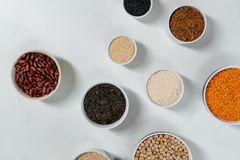
Most people eat three legumes and find them repetitive. There are dozens, they behave differently, and the range is where the interest is.
The complaint that plant-based eating is repetitive usually comes from someone eating chickpeas, red lentils and black beans on rotation.
There are a great many more, they taste different, and they suit different jobs.
The lentils
Red or split lentils. Collapse completely into a purée in around twenty minutes. For dal, for thickening soups, for anything where you want a smooth texture.
Do not use them where you want the lentils to hold their shape, which is the most common mistake.
Brown and green lentils. Hold together reasonably. General purpose, for stews, for salads at a push.
Puy and other small dark lentils. Hold their shape completely, with a firm bite and a peppery flavour. The best lentil for salads and for serving as a component rather than a mush.
More expensive and worth it where the texture matters.
Black beluga lentils. Similar, glossy and small, with a firm texture.
None of these need soaking. Cook until tender, salt the water, and add acid at the end rather than the beginning.
The beans
White beans — cannellini, haricot, butter beans, corona. Creamy, mild, absorb flavour. The most versatile.
Large butter beans or corona beans, cooked properly and dressed while warm with olive oil, lemon and herbs, are one of the best things in this article.
Borlotti and cranberry beans. Nutty, creamy, with a distinct flavour. Excellent in soups and with pasta.
Black beans. Firm skin, soft inside, distinctive earthy flavour. Central to Latin American cooking.
Pinto beans. Creamy, ideal for refrying and mashing.
Kidney beans. Firm and robust. A note on safety: raw or undercooked kidney beans contain a toxin that causes severe gastrointestinal illness. They must be boiled hard for at least ten minutes. Slow cookers on low do not reach a sufficient temperature — boil them first.
Tinned kidney beans are already cooked and safe.
Chickpeas. Firm, nutty, and improved enormously by cooking with a pinch of bicarbonate of soda, which softens the skins and produces a creamier result. This is what makes good hummus.
Fava or broad beans, dried. Peel them after cooking if the skins are tough. Central to Egyptian and Middle Eastern cooking.
The peas
Split peas, yellow and green. Collapse to a thick purée. For soups and for dal.
Whole dried peas, which hold their shape more.
Chana dal, split chickpeas, with a firmer texture and a nutty flavour, holding together better than most split pulses.
The Indian dals worth knowing
Indian cooking uses a far wider range than Western kitchens, and the varieties are worth exploring.
Toor dal, split pigeon peas, the base of sambar and of many everyday dals.
Moong dal, split mung beans, light and quick-cooking and the most easily digested.
Urad dal, black gram, used whole for dal makhani and split for dosa batter.
Masoor dal, red lentils, which is what most Western shops sell as red lentils.
These are cheap in South Asian shops and considerably more interesting than a single bag of red lentils.
The ones people forget
Lupin beans, very high in protein, requiring specific preparation and generally bought prepared. Note that lupin is an allergen and cross-reacts with peanut in some people.
Black-eyed peas, cooking quickly without soaking, with a distinctive flavour.
Adzuki beans, small, sweet, used in East Asian cooking both savoury and sweet.
Mung beans, whole, cooking quickly and sprouting easily.
Flageolet beans, pale green, delicate.
Gigante and other very large beans, which are a different eating experience entirely — meaty, and best treated as the centre of a dish rather than an ingredient in it.
How to make them interesting
The failure mode is treating all legumes as neutral protein to be added to things.
Cook them well, in seasoned liquid with aromatics, so they taste of something before anything is added.
Dress them warm. Beans absorb dressing far better while warm than cold. Olive oil, acid, salt and herbs on warm beans is a completely different thing from the same on cold ones.
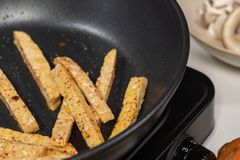
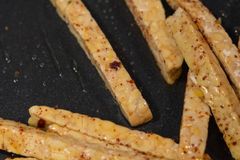
Fry some of them. Crisping beans in a hot pan with oil until the skins blister adds texture and a different flavour entirely.
Mash some. A partly mashed pot of beans has a much better texture than a uniform one — some whole, some broken down to thicken the liquid.
Use the liquid. Chickpea liquid — aquafaba — whips like egg white and works in meringues, mayonnaise and mousses, which is one of the more genuinely useful discoveries in plant-based cooking.
Buying
Dried legumes from a shop with high turnover, since old beans never soften properly.
South Asian, Middle Eastern and Latin American grocers have far better range and far better prices than supermarkets, and the stock moves quickly.
Tins are entirely fine, more expensive per portion, and the practical choice on a weeknight.
Also by Owen Brannagh
- Eating plant-based where the shops are limitedTransition & Family
- Dinner formulas that work every timeMeal Building
- Cooking with almost no equipmentCooking Technique
- Iron-rich meals: putting the principles togetherMicronutrients