Protein & Amino Acids
How much protein you actually need, and where it comes from
Protein is the first question everyone asks about plant-based eating and the one with the most straightforward answer, once you know which number applies to you.
The protein question arrives before any other, usually from someone who has never calculated their own intake.
The answer is not complicated, and the numbers are worth having.
The numbers
The general population recommendation in most countries sits around 0.8 grams of protein per kilogram of body weight per day. That figure is set to prevent deficiency across the population, with a safety margin built in.
For people who train seriously, sports nutrition bodies generally recommend something in the range of 1.4 to 2.0 grams per kilogram.
Older adults are generally advised toward higher intakes than the general recommendation, because the muscle protein synthesis response to a given dose declines with age.
For a person weighing seventy kilograms, that spans roughly 56 grams at the general recommendation to around 140 grams for a heavily training athlete.
The plant-specific adjustment
Two things differ with plant protein and both are modest.
Digestibility is somewhat lower for most plant sources than for animal ones, largely because of fibre and antinutrient content. Cooking, soaking, sprouting and processing all improve it.
Amino acid profile. Individual plant foods vary in their content of particular essential amino acids. Legumes are relatively low in methionine; grains are relatively low in lysine.
The practical consequence is a modest upward adjustment. Recommendations from bodies looking at this specifically tend to suggest something in the region of a ten to twenty percent increase over the general figure for people eating exclusively plant protein.
That is an adjustment, not a different regime.
The complementing myth
The idea that plant proteins must be combined at each meal to form a complete protein was popularised in the 1970s and has been retracted by its own author.
Current understanding: the body maintains a pool of amino acids from recent intake, and complementing across the day is sufficient. There is no need to pair beans with rice at the same sitting.
Eating a variety of protein sources across the day handles it, and most people do this without thinking about it.
Where the protein is
Approximate content per hundred grams of cooked food, which is the useful way to think about it.
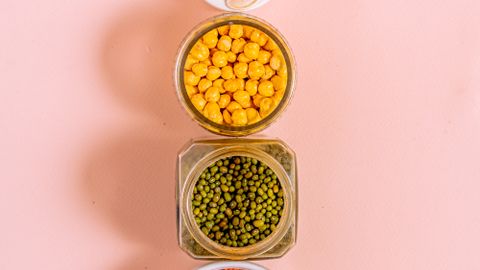
Legumes. Cooked lentils, chickpeas, black beans and similar sit around seven to nine grams per hundred grams cooked. A standard tin drained gives roughly fifteen grams.
Soy foods, which are the densest plant sources. Firm tofu around fifteen to twenty grams per hundred; tempeh around eighteen to twenty; edamame around eleven; textured soy protein considerably higher when dry.
Seitan, made from wheat gluten, around twenty-five grams per hundred. Not suitable for anyone avoiding gluten.
Grains. Cooked quinoa around four to five grams per hundred; other cooked grains around three to five. Lower per hundred grams than legumes and eaten in quantity, so they contribute meaningfully.
Nuts and seeds, around fifteen to twenty-five grams per hundred, with hemp seeds and pumpkin seeds at the higher end. Energy dense, so quantities are smaller.
Vegetables contribute small amounts that add up across a day.
The practical arithmetic
A day that reaches a reasonable intake without effort:
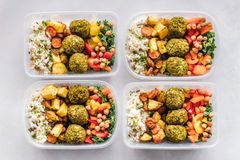
Porridge with soy milk and a spoon of peanut butter. A large lentil soup with bread. Tofu with rice and vegetables. A handful of nuts.
That comes to somewhere around seventy to eighty grams, which covers a seventy-kilogram person at the general recommendation with room to spare.
Adding a serving of tempeh or a protein-fortified soy product moves it comfortably into the range for someone training hard.
Where people actually fall short
Not usually in total protein. Deficiency in people eating adequate energy from varied plant foods is uncommon.
Where problems arise:
Insufficient total energy. If intake is low overall, protein gets used for energy. This is by far the commonest cause of inadequate protein status.
Diets built around refined carbohydrate and vegetables with few legumes, nuts or soy foods.
Older adults with reduced appetite.
Very high training loads without adjusting intake.
The distribution point
Total intake dominates. Distribution is a secondary optimisation with modest evidence behind it.
Spreading protein across three or four meals, each containing a meaningful amount, appears slightly better for muscle protein synthesis than one large serving and several negligible ones.
For most people, the practical version is: include a protein source at every meal rather than only at dinner.
Protein powders
Convenient, not necessary for most people, and useful for anyone with high requirements or a poor appetite.
Soy and pea protein are the common plant options and both are adequate. Blends address the amino acid profile point, though it matters less than marketing suggests for anyone eating varied food.
Powder is food. It has no special property beyond convenience.
This is general information, not individual advice. Anyone with a medical condition, or with concerns about their nutritional status, should consult a registered dietitian or their doctor.
Also by Dr. Farah Siddiqui
- Sustaining it for decadesTransition & Family
- Reintroducing foods, if you decide toTransition & Family
- Young athletes on plant-based dietsSport & Performance
- Protein requirements across a lifetimeProtein & Amino Acids