Meal Building
Snacks that are not just carbohydrate
Snacking is where a great deal of plant-based intake happens and where the protein disappears entirely.
Most snacks are carbohydrate. Fruit, crisps, biscuits, bread, cereal bars.
Which is why people are hungry again in an hour and why daily protein totals fall short despite decent meals.
The principle
A snack should contain at least two of protein, fat and fibre. Carbohydrate alone leaves quickly.
Fruit with nuts rather than fruit alone. Bread with something on it rather than bread. Crisps with hummus rather than crisps.
The best ones
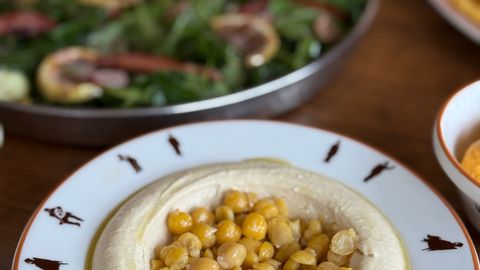
Roasted chickpeas. Drained, dried thoroughly, tossed in oil and spice, roasted until genuinely crisp — which takes longer than most recipes say.
Protein, fibre, crunch. Keep in a jar and they last a few days, going softer over time.
Edamame. Frozen, boiled for three minutes, salted. Substantial protein, no preparation, and eating them from the pod takes time, which is itself useful.
Hummus with vegetables or bread. The default for a reason.
Home-made is cheaper and better, particularly if you cook the chickpeas with a little bicarbonate of soda, which softens the skins and produces a much smoother result.
Nuts and seeds, particularly pumpkin seeds and peanuts.
Portioning matters — a bowl on the table disappears without registering.
Nut butter on wholemeal toast or apple.
Soy yoghurt with seeds and fruit. Check the protein content, since versions vary enormously.
Soy milk, as a drink. Around three grams per hundred millilitres, so a glass is a meaningful contribution.
Leftover legumes, dressed and eaten cold. Unfashionable and excellent.
Trail mix made yourself, which costs a fraction of the bought version and does not contain the sugar-coated things that make up most of the commercial ones.
The savoury ones
People default to sweet snacks and then wonder why nothing satisfies.
Olives. Pickles. Miso soup, which takes a minute from a sachet and is genuinely satisfying. Seaweed snacks. Salted nuts. A slice of good bread with olive oil and salt.
A savoury snack frequently ends the wanting-something feeling in a way that a sweet one extends.
The bought ones worth having
Not everything needs making.
Roasted broad beans and chickpea snacks, which have become widely available and are genuinely high in protein.
Good bars, checking that the protein content is meaningful and the sugar is not the first ingredient.
Rice cakes, which are almost pure carbohydrate and become a decent snack with nut butter on them.
Popcorn, which is a wholegrain, high in fibre, and low in energy for its volume. Home-made in a pan costs almost nothing.
The trap
Products marketed as healthy snacks are frequently confectionery.
Fruit and nut bars held together with dates are largely sugar with some nuts. Vegetable crisps are crisps. Granola bars are frequently biscuits.
Check the ingredient list and the protein content rather than the front of the packet.
Portioning
Nuts, seeds and nut butters are energy dense and easy to eat in quantity without noticing.
For anyone managing energy intake, portioning into containers rather than eating from the bag makes a measurable difference.
For anyone who needs energy — athletes, people who are underweight, older adults with poor appetite — these are exactly the snacks to reach for and the bag is fine.
Timing
Snacks work best either between meals when genuinely hungry, or deliberately around training.
Grazing continuously through the day tends to displace meals and produces a diet that is harder to construct properly.
Three meals and one or two deliberate snacks is a workable structure for most people. Six meals is fine for people with high requirements or small appetites.
The one to have ready
The most useful thing is having something available when hunger arrives, since the alternative is whatever is nearest.
Keep in the cupboard at work: nuts, a jar of nut butter, oat sachets, a tin of chickpeas and a fork.
Keep in the fridge: hummus, prepared vegetables, soy yoghurt.
Keep in the freezer: edamame.
That covers most situations, and it is the difference between a decent snack and whatever the vending machine has.
Also by Owen Brannagh
- Eating plant-based where the shops are limitedTransition & Family
- Dinner formulas that work every timeMeal Building
- Cooking with almost no equipmentCooking Technique
- Iron-rich meals: putting the principles togetherMicronutrients