Meal Building
Weight management on a plant-based diet
Plant-based diets are associated with lower body weight in population studies, and the mechanism is worth understanding because it works in both directions.
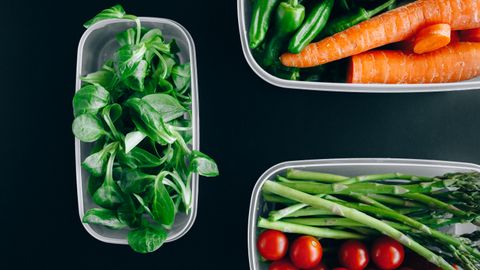
Observational studies consistently find lower average body weight in vegetarians and vegans than in omnivores, and trials of plant-based diets frequently show weight loss without deliberate restriction.
Understanding why is more useful than the observation itself.
The mechanism
Energy density. Plant foods generally contain fewer calories per gram, because of water and fibre content.
People tend to eat a fairly consistent weight of food rather than a consistent number of calories. Lower energy density therefore means fewer calories for the same volume and the same fullness.
Fibre and satiety. Fibre slows gastric emptying and increases fullness, both during and after a meal.
Protein, which is the most satiating macronutrient per calorie, and which is adequate on a well-constructed plant-based diet.
Reduced ultra-processed food, where people who change their diet frequently also reduce intake of energy-dense processed products.
Note that the mechanism is largely about energy density and satiety rather than anything metabolically special about plants.
Which means it works both ways
The same mechanism that produces unintentional weight loss produces unintentional weight loss in people who did not want it.
Athletes, adolescents, older adults, people who are underweight, and people with high energy requirements can all find themselves in a deficit without changing anything they consciously did.
If you do not want to lose weight, you have to actively increase energy density: oils, nuts, nut butters, avocado, dried fruit, less bulk from raw vegetables.
Where plant-based diets do not produce weight loss
Worth stating, since it is a common disappointment.
A plant-based diet built on refined carbohydrate, sugar, oil and processed alternatives has no particular advantage.
Chips, white bread, biscuits, crisps, sweetened plant milks and processed meat alternatives are all plant-based, and a diet built on them is energy dense and low in fibre.
Research distinguishing healthful from less healthful plant-based diets consistently finds substantially different outcomes.
The variable is whole plant foods, not the absence of animal products.
For weight loss
The measures that work, in rough order of usefulness.
Vegetables at volume. Half the plate. High fullness, low energy.
Legumes, which combine protein and fibre and have specific evidence for satiety.
Adequate protein, which preserves lean mass during a deficit and increases fullness.
Around 1.2 to 1.6 grams per kilogram, higher for those training.
Moderate the energy-dense items. Oils, nuts, nut butters, dried fruit and avocado are all nutritionally good and all extremely energy dense.
Not eliminating them — measuring them. A generous glug of oil is several hundred calories.
Whole rather than refined grains.
Whole fruit rather than juice.
Fewer processed alternatives.
Watch liquid calories, including sweetened plant milks and smoothies, which are easy to consume in quantity.
For gaining or maintaining weight
The reverse, and it requires deliberate effort.
Add fat everywhere. Oil in cooking, tahini in sauces, nut butter in porridge, avocado in everything.
Reduce bulk. Less raw salad, more cooked food, more refined grains alongside wholegrains.
Drink calories. Smoothies with soy milk, oats, nut butter and dried fruit deliver a large amount in a small volume.
Eat more frequently, five or six times, since volume per sitting is the constraint.
Dried fruit, nuts and seeds as snacks.
The things that are not helpful
Extreme low-fat approaches for anyone not following a specific clinical programme. Fat is required for fat-soluble vitamin absorption and for satiety.
Elimination beyond what the diet already involves. Progressive restriction of food groups is a warning sign rather than a strategy.
Detox and cleanse products, which have no evidence and which are frequently laxatives.
Treating plant-based as automatically slimming, which produces disappointment and sometimes over-restriction.
The disordered eating caution
Worth stating clearly.
Dietary restriction adopted for health or ethical reasons can become entangled with restriction driven by something else, and plant-based eating is sometimes used as socially acceptable cover for it.
Signs worth taking seriously: progressive narrowing of accepted foods, anxiety about eating outside your rules, avoidance of social eating, guilt after eating, weight loss you did not intend, and food occupying a large share of your attention.
This is common, treatable, and speaking to a professional about it is sensible rather than shameful.
Anyone with a history of an eating disorder should approach any dietary change with professional support.
The honest position
A whole-food plant-based diet makes it easier to eat fewer calories without feeling deprived, which is a genuine advantage for anyone wanting to lose weight.
It makes it harder to eat enough for anyone who needs a lot, which requires active management.
And it is not a weight loss diet. It is a way of eating that happens to have that property, and treating it as a weight loss strategy is where people end up either disappointed or under-eating.
General information rather than individual advice. Anyone with a history of disordered eating, or concerns about their eating, should speak to a doctor or a specialist service. Consult a registered dietitian for individual guidance.
Also by Dr. Farah Siddiqui
- Sustaining it for decadesTransition & Family
- Reintroducing foods, if you decide toTransition & Family
- Young athletes on plant-based dietsSport & Performance
- Protein requirements across a lifetimeProtein & Amino Acids