Meal Building
Dinner formulas that work every time
Recipes are for learning. Formulas are for cooking on a Wednesday with whatever is in the fridge.
Cooking without a recipe requires a structure rather than inspiration. These are the structures.
The bowl
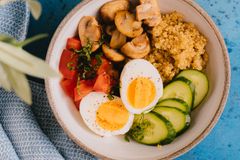
Grain plus legume plus cooked vegetable plus raw or pickled thing plus sauce plus crunchy topping.
Every component is interchangeable. Rice or farro or quinoa. Chickpeas or lentils or tofu. Roasted squash or sautéed greens. Pickled onion or fresh herbs. Tahini or peanut or herb sauce. Toasted seeds or crisp shallots.
Six slots, and the combinations are effectively unlimited.
The failure mode is missing the sauce or the crunchy thing, which is what makes it a bowl of separate items rather than a meal.
The stew
Aromatic base plus spice plus liquid plus legume plus vegetable plus acid at the end.
Onion, garlic and whatever else, cooked slowly. Spices bloomed in the fat. Tinned tomatoes or coconut milk or stock. Beans or lentils. Whatever vegetable needs using. Lemon or vinegar at the end.
Served with bread, rice or potatoes.
The whole of Indian, North African, Middle Eastern and Mediterranean home cooking sits inside this formula with different spice choices.
The pasta
Fat plus aromatic plus a substantial element plus a green thing plus pasta water plus finishing.
Olive oil, garlic and chilli. Beans, lentils, mushrooms or tomatoes. Greens wilted in. Pasta water to emulsify. Lemon, herbs and something crunchy on top.
The pasta water point is what most people miss — starchy water added to fat creates a sauce that coats rather than sits.
The tray bake
Vegetables plus a protein plus oil plus spice, roasted, plus a sauce afterwards.
Everything on one tray at high heat, not crowded, forty minutes with no attention. Sauce made while it cooks.
The lowest-effort dinner that produces genuinely good food.
The stir fry
Protein browned and removed, aromatics, vegetables in order of cooking time, protein back, sauce, finish.
The order matters. Everything at once produces a steamed grey mixture.
Hot pan, small batches, keep things moving.
Sauce made in advance in a bowl, added at the end, so it does not cool the pan while you measure.
The soup
Covered elsewhere on this site and it belongs in any list of formulas.
Base, spice, liquid, starchy element, vegetable, blend some, finish with acid and fat and something crunchy.
The salad that is a meal
Substantial base plus protein plus something roasted plus something sharp plus proper dressing plus texture.
Grains or sturdy leaves as the base, not delicate lettuce. A serious quantity of legumes. Roasted vegetables for sweetness. Pickle or citrus. A dressing with real fat in it. Nuts or seeds.
Salad fails as a main meal when it lacks the protein and the fat, which is most of the time.
The flatbread or wrap
Something creamy plus something substantial plus something sharp plus something fresh.
Hummus, roasted vegetables, pickled onion, herbs. Or beans mashed with lemon, greens, chilli sauce.
The creamy element is what holds it together and stops it being dry.
The principles behind all of them
Every formula contains the same underlying elements, which is why they work.
Something substantial for protein and satiety.
A starch for energy and bulk.
Fat, which carries flavour and makes food satisfying.
Vegetables for fibre and micronutrients.
Acid, which lifts everything and is the most commonly missing element.
Salt, sufficient.
Texture contrast, which is the second most commonly missing element.
Umami, deliberately added.
Any dish containing all eight will be good. Any dish missing acid or texture will feel like something is wrong without your being able to say what.
Cooking without a recipe
The practical method for a Wednesday.
Look in the fridge. Identify what needs using.
Pick a formula that fits it.
Fill each slot with whatever is available.
Season at each stage rather than at the end.
Taste before serving, and ask: does it need salt, does it need acid, does it need fat? Add whichever, taste again.
That final check is what separates food that is fine from food that is good, and it takes ten seconds.
Also by Owen Brannagh
- Eating plant-based where the shops are limitedTransition & Family
- Cooking with almost no equipmentCooking Technique
- Iron-rich meals: putting the principles togetherMicronutrients
- When one person in a couple changesTransition & Family