Cooking Technique
Grains: cooking them properly and why the ratios differ
Most grain cooking failures come from treating them all like rice, when they behave quite differently.
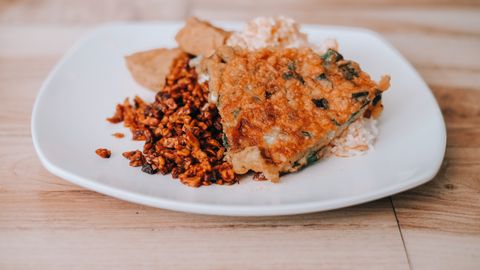
Grains are cheap, filling and the base of most meals, and people cook the same two badly rather than learning a range.
The two methods
Absorption. A measured amount of liquid, absorbed entirely. Produces distinct grains and retains everything soluble.
Requires knowing the correct ratio for that grain.
Pasta method. A large pot of well-salted boiling water, cooked until done, drained.
Forgiving, works for anything, and loses some water-soluble nutrients into the water. Excellent for grains whose absorption ratio you do not know, and for anything that varies with age.
Use the pasta method more than you probably do. It removes the guesswork entirely.
Salt
Salt the cooking water. Grains cooked in unsalted water are bland throughout and no amount of seasoning afterwards fixes it.
This is the single most common omission.
Rinsing
Rinse rice until the water runs clear if you want separate grains — this removes surface starch.
Do not rinse if you want stickiness, as in risotto or a rice pudding.
Rinse quinoa, always, to remove saponins, which are bitter. Most sold now is pre-rinsed and rinsing again costs nothing.
The grains, and how they behave
White rice. Roughly one and a half parts water to one part rice by volume, though this varies by type. Bring to a boil, cover, lowest heat, and do not lift the lid. Rest off the heat for ten minutes before fluffing, which is the step people skip and which makes the difference.
Brown rice. Longer, more water, and honestly better by the pasta method — a large pot of boiling water, drained after around thirty minutes, then steamed dry for ten minutes off the heat.
Quinoa. Around one and three quarter parts water. Cooks in fifteen minutes. Done when the germ separates into a visible spiral. Rest and fluff.
Toasting it dry in the pan before adding water improves the flavour considerably.
Bulgur. Barely needs cooking. Cover with boiling water or stock, lid on, stand for twenty minutes. Coarse grades take longer.
Couscous, which is pasta rather than a grain. Equal volume of boiling liquid, covered, ten minutes, fork through with oil.
Farro, spelt, barley. Chewy, robust, excellent in salads and soups. Pasta method, twenty-five to forty minutes depending on whether they are pearled. Pearled cooks faster; whole grain is chewier and takes longer.
Millet. Cooks quickly and goes from firm to porridge fast. Toast first, watch it.
Buckwheat. Not a grain botanically. Cooks in ten to fifteen minutes and turns to mush quickly. Toasted buckwheat holds its shape better.
Polenta. Coarse cornmeal, cooked in a large quantity of liquid with constant attention. Instant versions exist and are inferior and are fine on a Tuesday.
Oats. Rolled oats for porridge; steel-cut for something with more texture and a much longer cooking time.
Cooking in something other than water
The most straightforward upgrade.
Stock instead of water. The liquid from cooking beans. Coconut milk thinned with water. Water with a bay leaf, a strip of kombu, a squashed garlic clove, a piece of dried chilli.
Toasting the dry grain in oil before adding liquid — the pilaf method — adds a nutty depth and helps the grains stay separate.
Batch cooking
Cook more than you need. Grains keep three or four days refrigerated and freeze well.
One important food safety point: cooked rice should be cooled quickly and refrigerated promptly. Bacillus cereus spores survive cooking and produce toxin in rice left at room temperature, which causes food poisoning.
Spread it out to cool rather than leaving a covered pot on the stove, refrigerate within an hour, and reheat thoroughly.
Incidentally, cooling cooked rice and starches increases resistant starch content, which reduces the glycaemic response and feeds gut bacteria. A genuine small benefit to eating them cold or reheated.
Whole versus refined
Wholegrains contain the bran and germ, which supply fibre, B vitamins, minerals and phytochemicals. The evidence associating wholegrain intake with better health outcomes is substantial.
Refined grains cook faster, are easier to digest, and are appropriate around training or when the gut is unhappy.
Both belong in a kitchen. The useful shift is toward mostly wholegrain, not exclusively.
Reviving old rice
Day-old refrigerated rice is what fried rice requires — fresh rice is too moist and turns to mush.
To reheat any grain: a splash of water, covered, gentle heat, or a hot pan with oil to fry it. Microwaving with a damp cloth over the bowl works.
Reheat thoroughly, once.
Also by Owen Brannagh
- Eating plant-based where the shops are limitedTransition & Family
- Dinner formulas that work every timeMeal Building
- Cooking with almost no equipmentCooking Technique
- Iron-rich meals: putting the principles togetherMicronutrients