Cooking Technique
Fermenting at home: kraut, kimchi and pickles
Vegetable fermentation requires salt, vegetables and time, and it is the cheapest way to add flavour and interest to a plant-based kitchen.
Fermented vegetables add acidity, complexity and texture — three things plant-based cooking benefits from enormously — and they cost almost nothing.
How it works
Lactic acid bacteria are already present on vegetables. Salt draws water out, creating a brine, and suppresses many organisms while the lactic acid bacteria tolerate it.
They consume sugars and produce lactic acid, which drops the pH, which suppresses spoilage organisms further.
Submersion excludes oxygen, which excludes surface moulds and yeasts.
No starter culture is needed. The organisms are already there.
Sauerkraut, which is the place to start
Cabbage and salt. That is the entire ingredient list.
Shred the cabbage finely. Weigh it. Add salt at around two percent of the weight — twenty grams per kilogram.
Massage it firmly with your hands for several minutes. The salt draws water out and the cabbage becomes limp and releases a substantial amount of liquid.
Pack it into a jar, pressing down hard so the liquid rises above the cabbage. Weight it down so nothing floats above the brine.
Leave at room temperature. Bubbles appear within a day or two. Taste after five days, and again every few days.
When it tastes right — sour, still crunchy — move it to the fridge, which slows it almost to a stop.
One to four weeks depending on temperature and preference.
Kimchi
More involved and more rewarding.
Napa cabbage cut and salted in a brine for a couple of hours until wilted, then rinsed.
A paste of Korean chilli flakes, garlic, ginger, and something savoury — traditionally fish sauce or salted shrimp, and for a plant-based version, miso, soy sauce, or a mixture of soy and mushroom.
Some recipes include a cooked rice flour paste, which feeds the fermentation and thickens the coating.
Mix, pack, weight, ferment a few days at room temperature, then refrigerate.
It continues to develop for months and becomes increasingly sour, which is desirable — very sour kimchi is what you want for cooking.
Brined vegetables
Simpler still, and it works with almost anything.
Make a brine at around three to five percent salt — thirty to fifty grams per litre of water. Submerge the vegetables. Weight them. Wait.
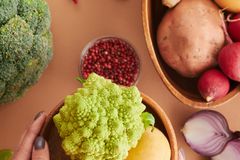
Works with: cucumbers, carrots, radishes, green beans, cauliflower, turnips, peppers, garlic.
Add whatever aromatics you like — dill, garlic, chilli, peppercorns, bay.
Firmer vegetables take longer. A week is a reasonable starting point.
The practical points
Salt concentration matters. Too little and spoilage organisms compete; too much and fermentation stalls. Two percent by weight for dry-salted vegetables, three to five percent brine for submerged ones.
Weigh rather than guessing.
Use non-iodised salt where possible. Iodine and anti-caking agents can inhibit fermentation, though the effect is generally small.
Everything must stay under the brine. This is the single most important rule. Anything above the surface will develop mould.
Use a weight — a glass jar filled with water, a fermentation weight, a folded cabbage leaf held down, or a bag of brine.
Allow gas to escape. Fermentation produces carbon dioxide. A tightly sealed jar can build pressure. Either loosen the lid daily or use an airlock.
Temperature. Cooler is slower and generally produces better texture and more complex flavour. Warm is faster and more prone to going soft.
Somewhere around eighteen to twenty-two degrees is comfortable.
Chlorinated water can inhibit fermentation. Let tap water stand for an hour or use filtered.
Is it safe?
Vegetable fermentation has an excellent safety record. The acidity and salt create conditions hostile to pathogens, and the process has been used for millennia without refrigeration.
Signs it has gone wrong: fuzzy coloured mould on the surface, a putrid rather than sour smell, or slimy texture throughout.
A white film on the surface is generally kahm yeast, which is harmless and can be skimmed, and which indicates too much oxygen exposure.
If in doubt, throw it out. It costs a cabbage.
One caution: people who are immunocompromised, pregnant, or elderly may wish to be more careful with home-fermented foods, and should discuss it if uncertain.
Using them
Not only as a side.
Chopped into grain bowls and salads. Stirred into soups at the end. Cooked into stews — sour kimchi in particular is excellent cooked. In sandwiches. As the acid element in any rich dish.
The brine is useful too — in dressings, in marinades, and as the acid in a sauce.
The health claims
Fermented foods contain live bacteria, and there is genuine research interest in effects on the gut microbiota, with some interventional evidence for increased microbial diversity.
The broader health claims run ahead of the evidence.
What is clear: they contain vegetables, they are low in energy, they add flavour without added fat or sugar, and they make plant-based food considerably more interesting.
That is sufficient reason without any of the rest.
Also by Owen Brannagh
- Eating plant-based where the shops are limitedTransition & Family
- Dinner formulas that work every timeMeal Building
- Cooking with almost no equipmentCooking Technique
- Iron-rich meals: putting the principles togetherMicronutrients