Cooking Technique
Cooking without oil, if you want to
Some people avoid added oil for medical or personal reasons. It is entirely possible and it requires different techniques rather than the same techniques without oil.
Oil-free cooking is promoted by some plant-based programmes, particularly those aimed at cardiovascular disease reversal, and it is chosen by some people for other reasons.
The evidence question is worth separating from the technique question.
The evidence, briefly
Programmes advocating whole-food plant-based diets without added oils have reported favourable outcomes in some studies, and the studies are generally small, uncontrolled, and involve multiple simultaneous changes — diet, exercise, stress management, smoking cessation.
Attributing the results specifically to oil removal is not supportable from that evidence.
Meanwhile the evidence for olive oil, in the context of a Mediterranean dietary pattern, is reasonably strong and comes from a large randomised trial.
The most defensible position: added oil is a concentrated energy source with few other nutrients, and moderating it is reasonable for anyone managing weight. The case for eliminating it entirely is not well supported for general use.
Where a clinician has advised it as part of a specific programme, follow that advice.
The techniques
If you are cooking without oil, these actually work.
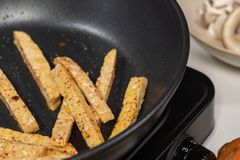
Water or stock sautéing. Heat the pan dry, add the onions, and add small splashes of water or stock as they begin to stick, scraping the pan.
The key point: small amounts, added repeatedly, so the pan stays hot and things brown rather than boil.
Adding a large quantity of liquid produces boiled onions.
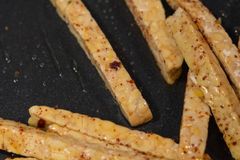
A good non-stick pan, which makes the difference between possible and infuriating.
Roasting on parchment or a silicone mat. Vegetables roast without oil, and they dry out more and brown less.
Tossing them in a little vegetable stock, aquafaba, or a thin purée before roasting helps them colour.
Steaming and braising, which never required oil.
Air frying, which produces a crisp result with very little or no oil and which is the single most effective piece of equipment for oil-free cooking.
Grilling and charring, which work without fat.
Replacing what oil does
Oil provides three things: heat transfer, mouthfeel, and flavour carriage. Each needs addressing separately.
Mouthfeel and richness from whole-food fat sources, which are permitted in most oil-free approaches.
Blended nuts and seeds, tahini, avocado, coconut, and blended white beans, which produce a surprisingly creamy result.
Flavour carriage. Many aroma compounds are fat-soluble, which is why spices bloomed in oil taste different.
Without oil, toast spices dry in the pan first, which develops flavour differently but effectively.
Depth, which oil contributes to. Compensate with more umami: tomato purée, miso, soy sauce, dried mushroom, nutritional yeast.
Oil-free food needs more seasoning generally — more salt, more acid, more aromatics.
Dressings without oil
The area where the difference is most noticeable, since a vinaigrette is mostly oil.
What works:
Tahini-based, thinned with water and acid. Tahini provides the fat from a whole food.
Blended nut or seed dressings. Cashews, sunflower seeds or hemp seeds blended with water, acid and seasoning.
Blended avocado with lime and herbs.
Blended white beans with lemon, mustard and garlic, which produces a creamy dressing with no fat at all.
Fruit-based, such as blended orange or mango with vinegar and chilli.
Note that most of these still contain fat, from whole food sources — the distinction being between added oil and fat within whole foods, which is the line most oil-free approaches draw.
Baking
The hardest area.
Fat provides tenderness and moisture. Removing it produces tough dry results unless something replaces it.
Common substitutions: apple purée, mashed banana, puréed dates, pumpkin purée, or blended nuts.
These add moisture and sweetness and do not fully replicate the tenderising effect of fat. Expect a different result rather than an identical one.
The nutritional considerations
Worth stating.
Fat-soluble vitamin absorption requires fat. Vitamins A, D, E and K and carotenoids are absorbed considerably better when eaten with fat.
Studies of salads eaten with and without fat have found substantial differences in carotenoid absorption.
Which means a completely fat-free meal is nutritionally suboptimal even if the calories are lower.
Including whole-food fat sources addresses this.
Essential fatty acids must come from somewhere. Nuts, seeds and their butters supply them.
Energy density. Removing oil substantially reduces energy density, which is the point for weight loss and a problem for anyone who is underweight, elderly, an athlete, or feeding a child.
Oil-free approaches are not appropriate for children or for anyone needing high energy intake.
Satiety and palatability. Food without fat is less satisfying to most people, which affects adherence.
The middle position
For most people, the useful adjustment is not elimination but moderation and choice.
Use oil where it does work — sautéing aromatics, roasting, dressing salads — and be less generous where it does not add much.
Use olive oil and other unsaturated oils as the default.
Get most of your fat from whole foods: nuts, seeds, avocado, olives, soy foods.
That covers the evidence without requiring an entirely different set of techniques.
General information rather than individual advice. Anyone advised by a clinician to follow a specific dietary programme should follow that advice. Oil-free diets are not appropriate for children or for anyone with high energy requirements.
Also by Owen Brannagh
- Eating plant-based where the shops are limitedTransition & Family
- Dinner formulas that work every timeMeal Building
- Cooking with almost no equipmentCooking Technique
- Iron-rich meals: putting the principles togetherMicronutrients