Meal Building
Dressings and sauces: the components that make a meal
A bowl of grains, beans and vegetables is dull without a sauce and excellent with one. Learn four and you will never eat a boring plate.
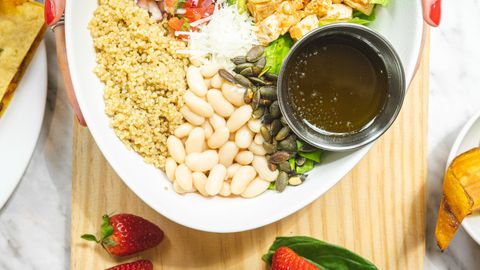
The single largest difference between a plant-based meal that people enjoy and one they endure is the sauce.
These four cover most situations, keep for a week, and take five minutes each.
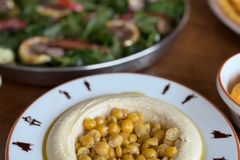
Tahini lemon
The workhorse.
Tahini, lemon juice, a crushed garlic clove, salt, and water to loosen.
The technique point: when you add liquid to tahini it seizes and goes stiff and grainy. This is normal. Keep adding water a little at a time and whisking, and it comes back smooth and pale.
People give up at the seized stage and conclude they have ruined it.
Adjust for thickness — thick as a dip, thinner as a dressing.
Variations: add cumin, add a spoon of miso, add chopped herbs, add chilli, replace lemon with lime and add ginger.
Keeps a week refrigerated and thickens as it sits; loosen with water.
A herb sauce
Any soft herb, olive oil, acid, garlic, salt.
Parsley is cheapest and most versatile. Coriander, mint, basil, dill all work, alone or mixed.
Chop by hand for texture or blend for a smooth sauce. Blending with the oil emulsifies it slightly.
Additions: capers, anchovy-free umami from olives or miso, chilli, toasted nuts, mustard.
This is chimichurri, salsa verde, zhoug and green sauce — every cuisine has one, and they are all the same idea.
Goes on beans, grains, roasted vegetables, tofu, bread.
Peanut or nut sauce
Peanut butter, soy sauce, lime juice, a little sugar or maple syrup, garlic, ginger, chilli, water to loosen.
The balance is the point: salty, sour, sweet, hot. Taste and adjust rather than measuring.
Works on noodles, on rice bowls, on roasted vegetables, as a dip.
Almond or cashew butter substitutes fine. Tahini works too and gives something quite different.
A vinaigrette that actually emulsifies
Three parts oil to one part acid is the traditional ratio; adjust to taste, and most people prefer more acid than the classic proportion.
The emulsifier is what matters. Mustard is the standard, and a spoonful holds the whole thing together. Tahini, miso and blended garlic also work.
Method: acid, mustard, salt and any aromatics in a jar first. Shake to dissolve the salt. Then add the oil and shake hard.
Adding the oil first produces something that separates immediately.
Salt matters here more than people think — an under-salted dressing tastes only of acid.
The principles behind all of them
Every good sauce balances the same elements.
Fat, which carries flavour and provides richness.
Acid, which lifts everything. Lemon, lime, vinegar of any kind, tamarind, pickle brine.
Salt, in some form — salt itself, soy sauce, miso, olives, capers.
Umami, which is what plant food most often lacks. Miso, soy, nutritional yeast, dried mushroom, tomato paste, olives.
Aromatics. Garlic, ginger, shallot, herbs, spice.
Sometimes sweetness, in small amounts, to balance acid and bitterness.
If a sauce tastes flat, it is nearly always missing salt or acid. Add a pinch of salt first, then a squeeze of lemon, and taste between each.
The two-minute upgrades
Things that improve almost any dish and require no recipe.
Toasted nuts or seeds. A pan, a few minutes, watching them. Adds texture, fat and protein.
Quick pickled onion. Sliced red onion, covered in vinegar with a pinch of salt and sugar. Half an hour. Cuts through richness.
Chilli oil. Hot oil poured over chilli flakes, garlic and salt. Keeps for months.
Crisp breadcrumbs. Stale bread blitzed, fried in oil with garlic until golden. The topping that makes pasta and beans feel finished.
Lemon zest, grated over at the end, which costs nothing and lifts everything.
The mistake to avoid
Making the sauce too thin and too little of it.
A bowl of grains and vegetables needs a substantial amount of sauce — more than feels right — and it should be thick enough to coat rather than pool at the bottom.
Make more than you think, keep it in a jar, and use it all week.
Also by Owen Brannagh
- Eating plant-based where the shops are limitedTransition & Family
- Dinner formulas that work every timeMeal Building
- Cooking with almost no equipmentCooking Technique
- Iron-rich meals: putting the principles togetherMicronutrients