Cooking Technique
Nutritional yeast, miso and the umami toolkit
The thing people miss most when they stop eating meat is savoury depth, and it is entirely replaceable if you know what to reach for.
Meat supplies umami, fat and salt by default. Remove it without replacing them and food tastes thin.
Umami is the one people cannot name and notice most.
What it is
The savoury taste, mediated by glutamate and by certain nucleotides.
It is a genuine basic taste with its own receptors, and it produces a sensation of depth and completeness.
Usefully, glutamates and nucleotides act synergistically — combining sources produces an effect greater than either alone, which is why the best savoury cooking uses several.
The toolkit
Dried mushrooms. Extremely high in both glutamates and nucleotides, which makes them the most powerful plant umami source available.
Soak in hot water, use the mushrooms, and use the soaking liquid as stock — the liquid is where most of it is.
Dried shiitake in particular. A jar of powdered dried mushrooms is worth making: blitz them in a grinder and add a spoonful to anything savoury.
Miso. Fermented soybean paste, salty and deeply savoury.
White miso is milder and sweeter; red and darker misos are stronger and saltier.
Stir it in at the end, off the heat, since prolonged cooking dulls the flavour and kills the live cultures.
Uses beyond soup: in dressings, in marinades, rubbed onto vegetables before roasting, whisked into gravy, and in surprisingly small amounts in sweet things.
Soy sauce and tamari. The most direct. Tamari is generally wheat-free.
Useful in things that are not East Asian — a splash in a tomato sauce, in a stew, in a gravy, adds depth without announcing itself.
Tomato purée, cooked until it darkens. Tomatoes are naturally high in glutamate, and concentrating and browning the purée intensifies it enormously.
Two minutes of cooking the purée in the pan before adding liquid is one of the highest-return two minutes in cooking.
Sun-dried tomatoes are similarly concentrated.
Nutritional yeast. Deactivated yeast, savoury and slightly cheesy.
Frequently fortified with B12, which makes it nutritionally useful as well.
Good in sauces, on pasta, in dressings, mixed into breadcrumbs. Some people find it dominant; use less than the recipes suggest until you know.
Fermented things generally. Sauerkraut, kimchi, fermented bean pastes, and the various fermented condiments across Asian cuisines.
Olives, capers, preserved lemon. Salty, sour and savoury together.
Kombu. The seaweed that gave umami its name, since glutamate was first isolated from it. A piece in a stock or a pot of beans.
Note the iodine content, which is high in kelp — occasional use is fine, daily use is not advisable.
Yeast extract, the concentrated spread, in very small amounts. A quarter teaspoon in a stew disappears entirely and adds depth.
Nutritional yeast flakes toasted, or breadcrumbs fried with garlic, which add savoury and texture together.
The technique side
Umami is not only ingredients. Browning creates it.
Brown your onions properly. Twenty minutes rather than five.
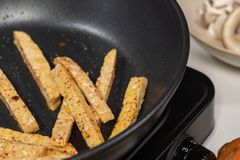
Brown mushrooms properly. Hot pan, not crowded, undisturbed until they release and then colour. Mushrooms cooked wet are grey and rubbery; mushrooms browned properly are one of the most savoury things you can produce.
Roast rather than boil where you have the choice.
Char something. Blackened edges add bitterness and depth.
Deglaze. The browned material stuck to the pan is concentrated flavour. A splash of liquid and a scrape releases it into the dish.
Combining them
The synergy point matters practically.
A dish with dried mushroom, tomato purée and soy sauce tastes considerably more savoury than one with three times as much of any single one.
The standard combination worth internalising: something browned, something fermented, something concentrated.
Browned onions, miso, tomato purée. Or browned mushrooms, soy sauce, dried mushroom stock.
The salt relationship
Most umami sources are salty, which means adding them changes the salt balance.
Season at the end, after the miso or soy has gone in, or you will over-salt.
Conversely: food that tastes flat frequently needs salt rather than umami, and it is worth adding a pinch and tasting before reaching for anything else.
The cheese question
People miss cheese most, and the reason is that aged cheese is extremely high in glutamate as well as being salty and fatty.
Replicating it means addressing all three: nutritional yeast for savour, salt, fat from nuts or oil, and acid.
The standard combination — cashews soaked and blended with nutritional yeast, lemon, salt and garlic — works because it covers all four.
Commercial alternatives vary enormously and have improved considerably. The fermented ones are better than the starch-based ones, and considerably more expensive.
Also by Owen Brannagh
- Eating plant-based where the shops are limitedTransition & Family
- Dinner formulas that work every timeMeal Building
- Cooking with almost no equipmentCooking Technique
- Iron-rich meals: putting the principles togetherMicronutrients