Meal Building
Batch cooking without eating the same thing five times
The problem with cooking once and eating five times is the eating five times. There are ways round it.
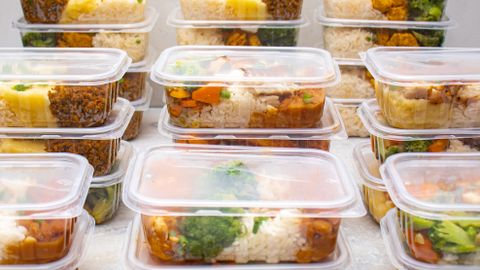
Batch cooking is the most efficient way to eat well without cooking every night, and most people abandon it because they get bored by Wednesday.
The fix is to batch components rather than meals.
The principle
A finished dish can only be eaten as itself. A component can become several things.
Cook a pot of plain, well-seasoned beans and they can be a stew on Monday, a salad on Tuesday, a soup on Wednesday and a filling on Thursday.
Cook a finished chilli and it is chilli four times.
What to batch
A pot of legumes, plainly cooked with aromatics and salt, kept in their liquid.
A grain, plainly cooked and seasoned.
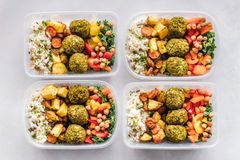
A tray of roasted vegetables, seasoned simply so they go with anything.
A base sauce — a tomato and onion base, or a simple curry base — which can be finished differently each time.
Two or three finishing sauces, which are what actually create variety.
Deliberately under-season the components. A component seasoned heavily with one cuisine's spices can only go in that direction.
The variety comes from four places
The sauce. The single biggest lever. The same beans and grain with tahini sauce, with a herb sauce, with peanut sauce and with chilli oil are four genuinely different meals.
Make two or three different sauces at the weekend. They take five minutes each and keep a week.
The format. The same ingredients as a bowl, a soup, a wrap, on toast, in a salad, or fried in a pan feel different.
Blending something changes it completely.
The temperature. Warm food and cold food from the same components read as different meals.
The topping. Something crunchy, something pickled, something fresh. Toasted seeds one day, crisp shallots the next, pickled onion the third.
A worked week
Components: a pot of white beans, a batch of farro, a tray of roasted squash and onion, a tahini sauce, a herb sauce, quick pickled onions, and toasted seeds.
Monday: warm bowl. Farro, beans, squash, tahini sauce, seeds.
Tuesday: soup. Half the beans and squash blended with stock, topped with the herb sauce and seeds.
Wednesday: beans and greens on toast, with olive oil, chilli and lemon. Ten minutes.
Thursday: farro salad, cold, with the pickled onions, herb sauce, and whatever raw vegetable is left.
Friday: beans crisped in a hot pan, in a wrap with the remaining sauce and pickle.
Five distinct meals, one cooking session, no repetition that registers as repetition.
The practical points
Cool things quickly and refrigerate promptly. Divide into shallow containers rather than leaving a large pot on the stove.
This matters for food safety, particularly for rice and for cooked legumes.
Store grains and legumes separately from wet ingredients, so they do not go soft.
Keep sauces in jars rather than mixed into anything.
Freeze half. Whatever you will not eat by Wednesday goes in the freezer immediately rather than being thrown away on Friday.
Frozen in single portions, labelled with what and when.
Three to four days is a reasonable limit for cooked food in the fridge.
What freezes well and what does not
Freezes well: cooked legumes, soups and stews, sauces, cooked grains, bread, herbs in oil, tomato base, curry base, blanched greens.
Freezes badly: anything with a high water content that will be eaten raw, potatoes in soup which go grainy, and anything relying on crisp texture.
Freezes surprisingly well: cooked rice, which reheats fine from frozen; and tofu, which changes texture entirely and becomes better for some purposes.
Scaling
Cooking double takes very little more time than cooking single. Cooking quadruple frequently does not fit in the pan.
The efficient scale is generally double or triple a normal recipe.
The exception is legumes and grains, where cooking a large quantity takes exactly the same attention as a small one. Cook a lot.
The realistic caveat
Nobody does this every week.
The value is having a default to return to. A week where you cook components on Sunday and assemble all week is a good week; a week where you do not falls back on tinned beans and pasta, which is fine.
A system that only works when executed perfectly is not a system.
Also by Owen Brannagh
- Eating plant-based where the shops are limitedTransition & Family
- Dinner formulas that work every timeMeal Building
- Cooking with almost no equipmentCooking Technique
- Iron-rich meals: putting the principles togetherMicronutrients