Meal Building
Lunch you will actually take to work
Packed lunch fails because it is either too ambitious or too dull, and both failures end at the sandwich shop.
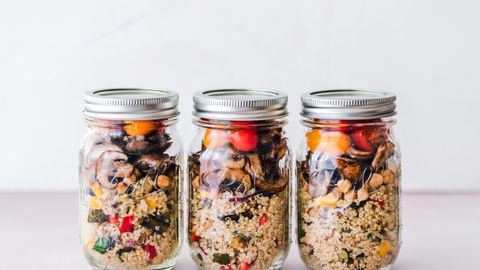
The lunch problem is specific: it has to be made in advance, survive several hours, be eaten without a kitchen, and not be so boring that you buy something instead.
The formats that work
The jar salad. Layered so that the dressing does not make everything soggy.
Dressing at the bottom. Then hard things that will not absorb — chickpeas, roasted vegetables, grains. Then softer things. Leaves at the top, kept dry.
Shake it into a bowl when you eat, or eat from the jar.
Made the night before, keeps two days.
The grain bowl, assembled cold, with the sauce in a separate small container.
Grain, legumes, roasted or raw vegetables, something pickled, something crunchy, sauce added at the last minute.
Soup in a flask, which is under-used and excellent in cold weather. Heat the flask with boiling water first and it stays hot all morning.
A proper sandwich, which requires more than salad in bread.
Hummus, roasted vegetables and greens. Mashed white beans with lemon and herbs. Marinated tofu with pickles. Peanut butter and something sharp.
The key: something creamy for moisture, something with substance for protein, something sharp for interest, and good bread.
Leftovers. The most sensible and most reliable option. Cook more at dinner.
The mistakes
Not enough protein. The main reason people are hungry by three and buy something.
A salad with a token spoonful of beans is not lunch. Aim for a proper portion — a tin of chickpeas, a substantial piece of tofu, a mug of lentils.
No fat. Dry food is unsatisfying. Dressings, tahini, nuts, avocado, olive oil.
Too ambitious. Anything requiring assembly in the morning will not happen after the second week.
Too repetitive. The same salad daily fails by Wednesday.
The solution to both: prepare components rather than complete meals, and vary the sauce and the topping rather than the whole thing.
Soggy. Keep wet things separate until eating. A small container for dressing costs nothing.
Things that keep well
Worth knowing when planning.
Keep for several days: cooked grains, cooked legumes, roasted vegetables, hummus and other dips, pickled vegetables, dressings, hard-boiled alternatives, firm salads made with sturdy ingredients.
Do not keep: dressed leaves, sliced avocado without acid, anything fried and crisp, cut apples without lemon.
Improve with keeping: grain salads with dressing, marinated beans, anything with pickled elements, most stews.
A grain salad made on Sunday is frequently better on Tuesday.
The five-minute assemblies
For anyone who will not do meal prep.
Tinned beans, drained, with olive oil, lemon, salt, and whatever herb is in the fridge. Bread on the side. Two minutes.
Hummus, a bag of pitta, a bag of pre-cut vegetables and a handful of olives. Bought entirely, assembled in the morning, considerably better than a shop sandwich.
Instant noodles with a block of tofu, frozen edamame and something green added. Three minutes at a kettle.
Overnight oats made savoury — oats soaked in stock rather than milk, with miso, seeds and vegetables. Unusual and it works.
The office constraints
No fridge:
Food safety matters. Anything that has been at room temperature for several hours in a warm office is worth being careful about.
No microwave: flask soups, or food designed to be eaten cold, which is most of the above.
Nowhere to wash up: containers that go straight into a bag.
Smell: a genuine consideration in shared offices. Reheating certain things in a shared microwave has social consequences.
The batch that supplies a week
The most reliable system.
On Sunday: cook a grain, cook or open legumes, roast a tray of vegetables, make a dressing, make a pickle.
Each morning: assemble a container in two minutes from the components, varying the combination and the dressing.
Add something bought — bread, fruit, a bag of leaves — to fill it out.
This produces five different lunches from one cooking session and it survives contact with a Tuesday.
The honest allowance
Do not plan five packed lunches.
Plan three or four, and accept that one or two days you will buy something. A system that requires perfection is a system you will abandon.
Also by Owen Brannagh
- Eating plant-based where the shops are limitedTransition & Family
- Dinner formulas that work every timeMeal Building
- Cooking with almost no equipmentCooking Technique
- Iron-rich meals: putting the principles togetherMicronutrients