Meal Building
The alternatives aisle: what is worth buying
Meat and dairy alternatives have improved enormously and vary enormously, and reading the label tells you more than the marketing does.
Meat and dairy alternatives occupy an odd position: promoted as health foods by some and dismissed as ultra-processed by others.
Both framings are too broad. The category contains very different products.
What the evidence says about processing
Observational research associates higher intakes of ultra-processed food with poorer health outcomes across a range of measures. That association is reasonably consistent.
Whether processing itself is the cause, or whether it reflects the composition of the products typically involved — high in salt, sugar, refined starch and fat, low in fibre — remains debated.
The practical position: a diet built on whole legumes, grains, vegetables, nuts and soy foods is better supported than one built on packaged alternatives.
That does not make alternatives bad. It makes them a convenience rather than a foundation.
What to look at on the label
Protein content. Varies enormously. Some products contain protein comparable to meat; others are mostly starch and oil with a small amount.
Compare per hundred grams rather than per serving, since serving sizes differ.
Salt. Frequently high. Some alternatives contain considerably more sodium than the products they replace, and this is the most consistent nutritional criticism of the category.
Compare per hundred grams against the guidance figures for your country.
Saturated fat. Products using coconut oil for texture can be high. Not automatically a problem in the context of an overall diet, and worth knowing.
Fibre. Products based on whole legumes retain fibre; those based on isolated protein largely do not.
Fortification. This is where alternatives earn their place. Many are fortified with B12, iron, zinc and calcium, and for someone plant-based those are meaningful contributions.
Check, since fortification is not universal.
The ingredient list. Shorter is generally better. A product whose first ingredients are beans or soy is different from one whose first ingredients are water, oil and starch.
Plant milks, specifically
The category where the differences matter most, because people consume them in quantity.
Soy is the only common plant milk with protein comparable to dairy — around three grams per hundred millilitres. Nutritionally the closest substitute.
Pea milk is similarly high in protein and less widely available.
Oat milk has moderate carbohydrate, low protein, and a texture people prefer in coffee. Some varieties contain added sugars, and the enzymatic processing that produces the sweetness means the sugar content is relatively high even where none is added.
Almond milk is very low in protein and very low in calories, and is essentially flavoured water with a small amount of almond. Fine as a drink, not a nutritional substitute for milk.
Coconut, rice and others are similarly low in protein. Rice drinks are not recommended for young children because of arsenic content.
Fortification is the key variable. Fortified varieties contain calcium comparable to dairy plus commonly B12, iodine in some countries, and vitamin D. Unfortified varieties, including most organic ones in some markets, contain almost none.
Check the label, and shake the carton, since calcium settles.
Yoghurt alternatives
Soy-based versions have the best protein content. Coconut and oat versions are largely fat or carbohydrate.
Check for added sugar, which is frequently substantial in flavoured varieties, and for live cultures if that matters to you.
Cheese alternatives
Generally the weakest category nutritionally. Most are starch and oil, low in protein, with limited nutritional contribution.
The fermented cashew-based ones are considerably better and considerably more expensive.
Treat as a condiment rather than a protein source.
Meat alternatives
Enormous variation.
Whole-food based — burgers made from beans, lentils, mushrooms and grains. Generally higher in fibre, lower in protein density, and less like meat.
Protein-isolate based — the products designed to replicate meat closely. Higher protein, higher salt, more processed.
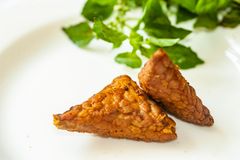
Traditional products — tofu, tempeh, seitan. Minimally processed, high in protein, and cheaper than either of the above.
These are the best value in the category by a wide margin and are frequently overlooked in favour of products that resemble meat.
The environmental question
Life cycle analyses generally find plant-based alternatives to have substantially lower environmental impact than the animal products they replace, across greenhouse gas emissions, land use and water.
Whole plant foods have lower impact still.
The comparison that matters is what the product replaces, not what it is compared with in the abstract.
The practical position
Alternatives are useful for transition, for convenience, for social situations, and for fortification.
They are more expensive per gram of protein than legumes, tofu and grains, generally higher in salt, and lower in fibre.
A reasonable approach: build the diet on whole foods and use alternatives where they solve a specific problem — a quick dinner, a barbecue, feeding a sceptical relative.
And when buying, compare per hundred grams, look at protein, salt and fibre, and check for fortification.
General information rather than individual advice. Anyone with specific dietary requirements should consult a registered dietitian.
Also by Dr. Farah Siddiqui
- Sustaining it for decadesTransition & Family
- Reintroducing foods, if you decide toTransition & Family
- Young athletes on plant-based dietsSport & Performance
- Protein requirements across a lifetimeProtein & Amino Acids