Meal Building
Spreading Legumes And Grains Across A Day
Concentrating all the protein in the evening meal is common and avoidable, and distributing legume servings changes what the day supplies.

Most plant-based days are back-loaded: a carbohydrate breakfast, a light lunch, and everything substantial in the evening. The distribution matters as much as the total.
What the typical shape looks like
Breakfast is often toast, cereal or fruit, all of which contribute little protein. Lunch is frequently whatever was quickest.
The evening meal then carries the pulses, the tofu, the substantial cooking, and most of the day's protein arrives in a single sitting.
The daily total may be adequate on paper while two of the three eating occasions contribute almost nothing to it.
Why distribution has a physiological basis
Muscle protein synthesis responds to a meal in a stepwise way, rising when a meal supplies enough amino acids and returning to baseline afterwards.
A day with one large protein meal produces one such response; a day with three moderate ones produces three. Total intake is not the only variable.
The effect is modest in an ordinary adult and more relevant for people training seriously, for older adults, and for anyone whose appetite limits how much fits in one sitting.
What moves the earlier meals
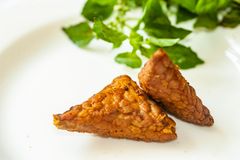
Breakfast is the easiest to change and the most commonly neglected. Soy milk, tofu, beans, peanut butter and oats with seeds all shift it substantially.
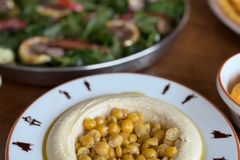
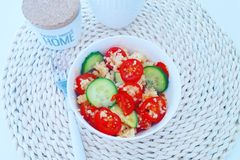
Lunch benefits from treating cooked pulses as a default component rather than a feature: a portion of lentils or chickpeas added to whatever else is there.
Keeping a container of cooked pulses in the fridge is the single practical step that makes both changes possible without additional cooking.
The energy side of the same problem
Back-loaded days often mean under-eating during the working day and compensating in the evening, which affects energy levels and appetite regulation.
Plant-based diets are bulkier per unit of energy, so a small lunch can be genuinely insufficient even when it feels adequate at the time.
Adding energy-dense components such as nuts, seeds, avocado and oil to the earlier meals addresses this without increasing volume much.
How to make it hold
Distribution survives when it is built into cooking rather than into intentions, which means cooking pulses and grains in quantities that cover several meals.
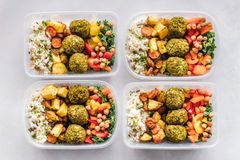
A batch of cooked chickpeas, a pot of grain and a jar of dressing cover lunches for several days with assembly rather than cooking.
Anyone with a specific reason to track this closely, such as pregnancy, recovery from illness or serious training, should be doing it with a registered dietitian rather than alone.
Also by Owen Brannagh
- Eating plant-based where the shops are limitedTransition & Family
- Dinner formulas that work every timeMeal Building
- Cooking with almost no equipmentCooking Technique
- Iron-rich meals: putting the principles togetherMicronutrients