Meal Building
Meals That Travel Without Refrigeration
Foods keep safely outside a refrigerator when water activity, acidity or dryness limit bacterial growth, which narrows road-trip and lunchbox options in predictable ways.
Packing food for a day without a cooler is a food safety problem before it is a cooking problem. What survives is determined by chemistry rather than by tradition.
What makes food unsafe at room temperature
Bacteria multiply fastest in a temperature band roughly between refrigeration and hot holding, and moist, low-acid, protein-containing foods provide ideal conditions.
Cooked beans, tofu, cooked grains and cut melon all sit squarely in that description. They are safe cold or hot, but not warm for extended periods.
Federal food safety guidance limits how long perishable food should remain in that band, with the allowance shortening considerably in hot weather.
Three properties that change the answer
Low water activity is the first. Dried fruit, nuts, seeds, crackers and dense breads hold too little available water for rapid microbial growth.
Acidity is the second. Vinegar-dressed and pickled preparations, and acidic fruits, are inhospitable in a way neutral foods are not.
Sugar and salt concentration is the third, working by binding water. This is why jams, nut butters and heavily salted preparations keep without chilling.
Building a portable meal from those categories
Nut butter with dense bread supplies protein and fat with no perishable component. Roasted chickpeas, trail mixes and seed bars occupy the same territory.
Vinegar-forward grain and legume salads sit in a more ambiguous position, since acid slows growth but cooked legumes remain a favorable substrate.
Whole fruit travels well until it is cut. An intact apple, orange or banana has an intact protective barrier that a sliced one does not.
Insulation buys time rather than safety
An insulated bag with a frozen pack extends the safe window considerably and is the more practical solution for foods that genuinely need chilling.
A frozen component, such as a frozen bottle of water or a frozen portion of soup, functions as the coolant and thaws into part of the meal.
Insulated containers filled with boiling water and emptied before adding hot food work in the other direction, holding soup above the danger band rather than below it.
What to plan for a long day out
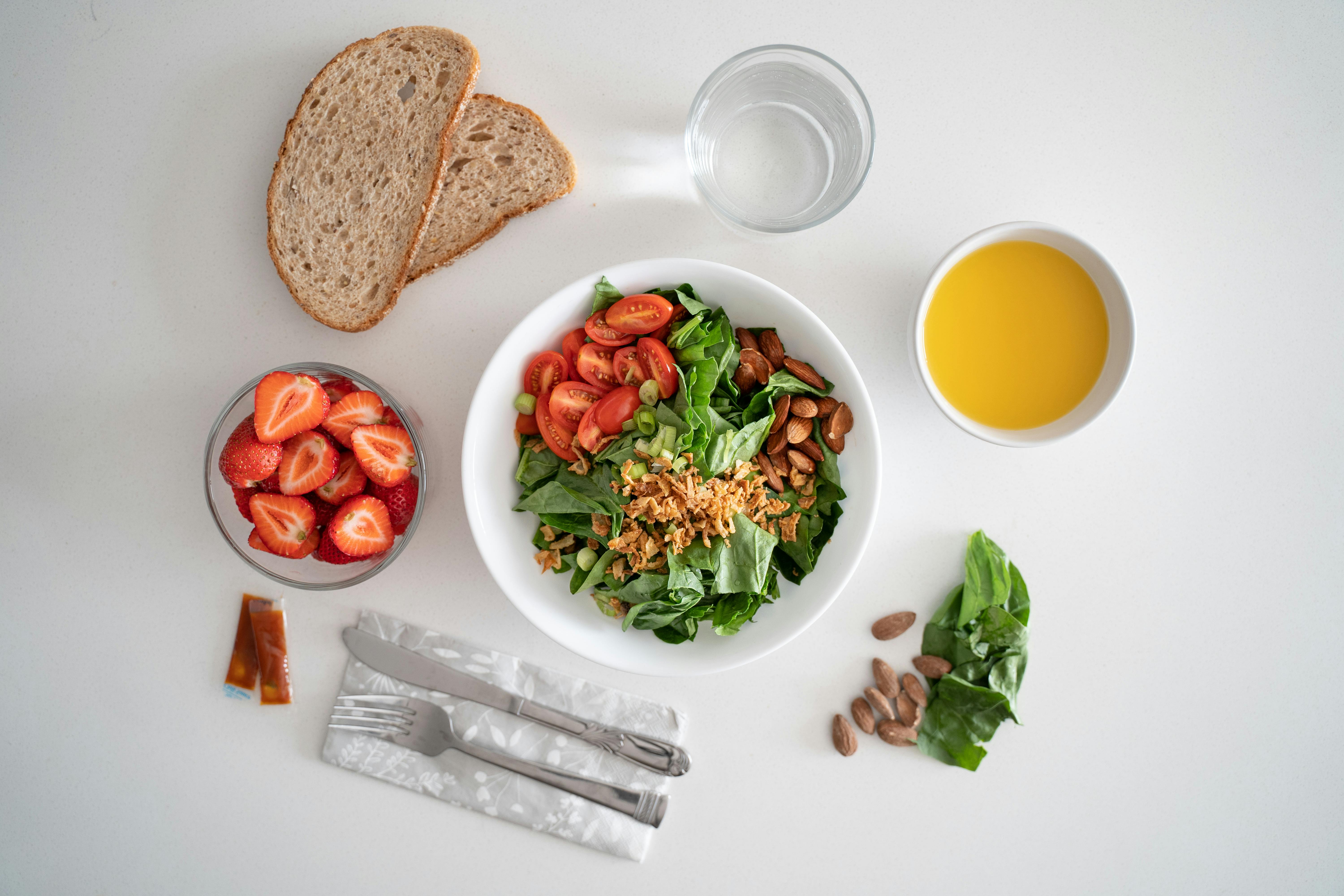
Shelf-stable staples make a reasonable core: nuts, dried fruit, seed crackers, nut butter packets, dense whole grain bread and shelf-stable fortified plant milk boxes.
Anything cooked, moist and low-acid belongs in the chilled category and should be eaten in the first hours or kept genuinely cold.
Where a food's safety is uncertain after hours in a warm car, the deciding factor is time and temperature rather than smell or appearance, since the organisms of concern give no sensory warning.
Also by Owen Brannagh
- Eating plant-based where the shops are limitedTransition & Family
- Dinner formulas that work every timeMeal Building
- Cooking with almost no equipmentCooking Technique
- Iron-rich meals: putting the principles togetherMicronutrients