Cooking Technique
Why Microwaving Vegetables Keeps More Than Boiling
Microwaves heat water inside food directly, so vegetables cook fast with little added liquid, and water-soluble vitamins have far less opportunity to leach away.
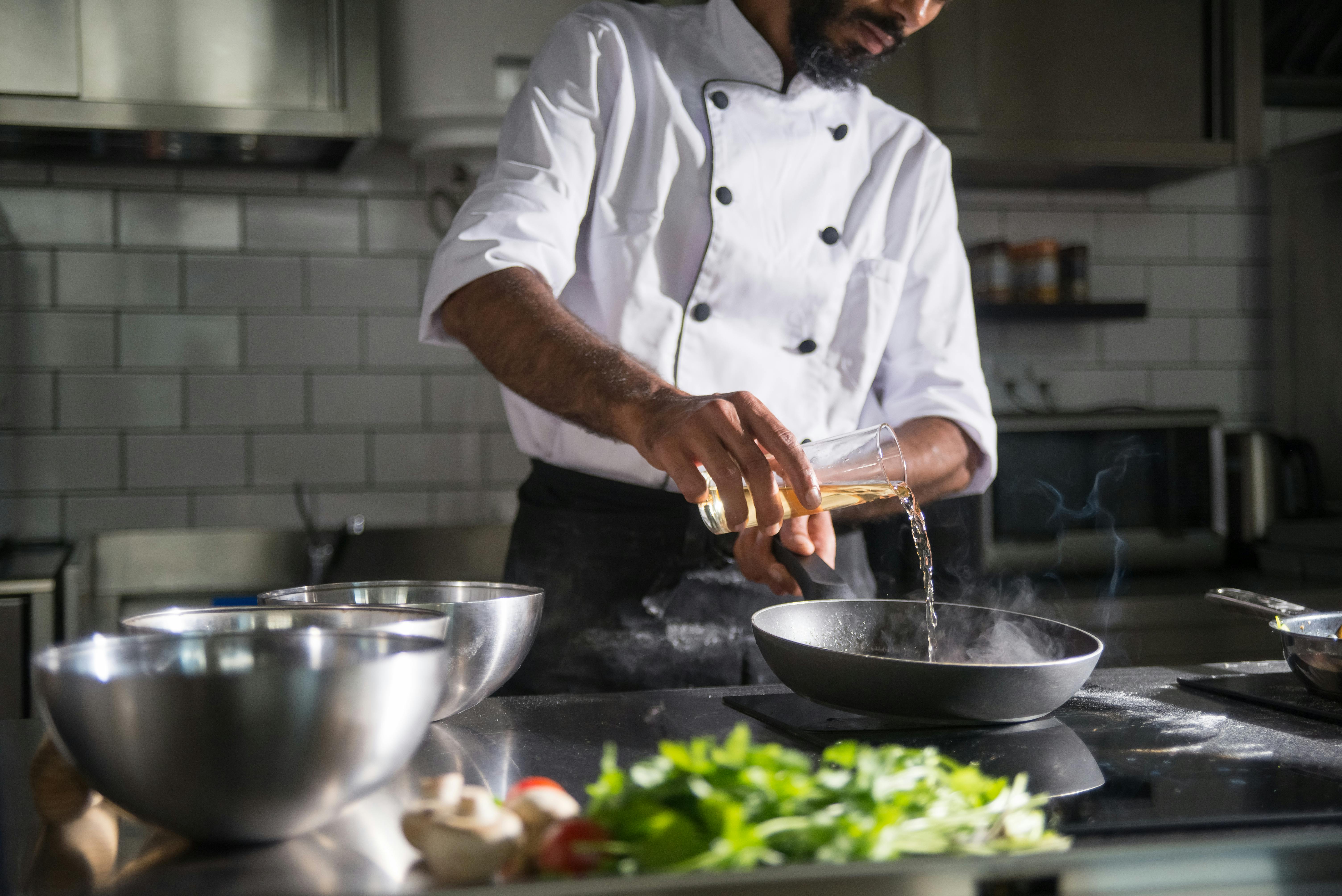
Microwave cooking has a reputation for damaging food that the mechanism does not support. It heats quickly with minimal water, which is broadly favorable for nutrient retention.
How a microwave deposits energy
Microwave radiation causes water molecules within the food to rotate rapidly, and that motion becomes heat. The energy is deposited inside the food rather than conducted in from a surface.
Because heating starts throughout the moist interior, cooking times are short. Less time at temperature means less thermal degradation of heat-sensitive compounds.
The radiation is non-ionizing, meaning it lacks the energy to alter molecular structure the way ionizing radiation does. It moves molecules; it does not break them apart.
Leaching is the larger loss
Vitamin C and the B vitamins dissolve readily in water. When vegetables are boiled, a meaningful share of these migrates into the cooking water and is poured down the sink.
Microwaving typically uses a spoonful of water or none at all, so there is little liquid for anything to dissolve into. The nutrients stay where they were.
Steaming shares this advantage for the same reason, which is why steamed and microwaved vegetables tend to compare similarly in retention studies of these vitamins.
Heat sensitivity still applies
Speed does not exempt food from heat damage. Vitamin C degrades with temperature regardless of the method, and overcooked microwaved broccoli loses it just as overcooked boiled broccoli does.
Folate is likewise vulnerable to both heat and water. Short cooking with little liquid limits both routes of loss simultaneously.
Some nutrients move in the other direction. Carotenoids in carrots and tomatoes become more available after cooking, because heat breaks down the cell walls holding them.
Uneven heating is the real drawback
Energy deposition depends on where water sits in the food, so dense or unevenly shaped pieces develop hot and cold regions. Corners and edges receive more than centers.
Stirring partway through and letting food stand afterward allows conduction to even out the temperature. Standing time is part of the cooking, not a pause after it.
Foods low in water, such as nuts or dry grains, heat poorly and unpredictably. The method is suited to moist vegetables and reheating, not to everything.
Where it fits in a plant-based kitchen
Leafy greens, green beans, squash, frozen vegetables and potatoes all cook well with a covered dish and a small amount of water. Coverage traps steam and speeds the process further.
Reheating cooked legumes and grains works well, since they are already hydrated and heat evenly. Batch-cooked components suit the method particularly.
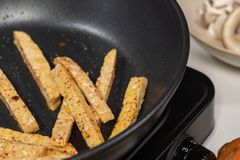
What the microwave cannot do is brown. Surface temperatures stay near the boiling point of water, so anything wanting roasted flavor belongs in an oven or a hot pan.
Also by Owen Brannagh
- Eating plant-based where the shops are limitedTransition & Family
- Dinner formulas that work every timeMeal Building
- Cooking with almost no equipmentCooking Technique
- Iron-rich meals: putting the principles togetherMicronutrients