Cooking Technique
Why Cups Measure Flour And Beans Badly
American recipes measure dry ingredients by volume, but flour and legumes pack unpredictably, which is why the same cup can hold noticeably different amounts of food.
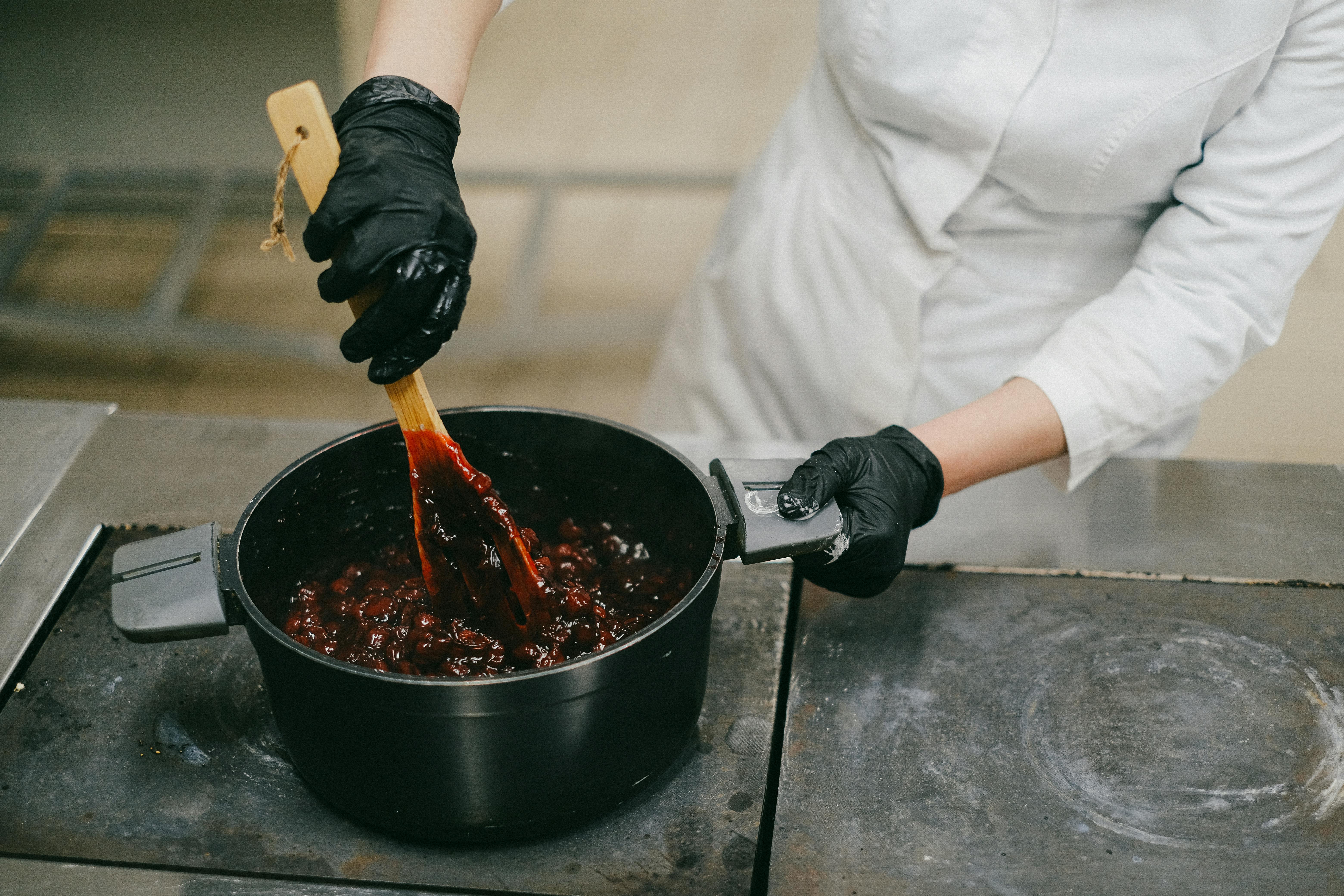
American home recipes overwhelmingly call for cups, while most of the rest of the cooking world weighs dry ingredients. The difference matters most for flours and legumes, where volume and mass drift apart.
A cup measures space, not substance
A measuring cup fixes a volume. What ends up inside it depends on how densely the particles settle, and that settling varies with handling, humidity and the shape of the pieces.
Scooping a cup directly from a bag compresses the contents against the rim. Spooning the same ingredient in loosely and leveling it holds less, sometimes substantially less.
Weight has no such ambiguity. A hundred grams of chickpea flour is the same amount of chickpea flour no matter who filled the container or how humid the kitchen was.
Why flour is the worst offender
Flour particles are fine enough to trap air between them and compact readily under pressure. The gap between a packed cup and a lightly spooned cup is wide enough to change a dough.
Whole grain flours make this worse because bran fragments are irregular and bulky. They resist settling into a uniform bed, so the same nominal cup can vary batch to batch.
Recipes that rely on hydration ratios, such as breads and batters, feel the error immediately. Too much flour by weight produces a stiff dough that no amount of extra mixing fixes.
Legumes bring a second problem
Dried beans and lentils vary in size, shape and moisture depending on variety and how long they have been stored. A cup of small lentils packs far more closely than a cup of large limas.
Older beans have lost moisture, so a given weight represents more dry matter and takes longer to hydrate. Volume measurement hides this entirely.
Cooked yields differ accordingly. Two cooks measuring one cup of dried beans can finish with visibly different amounts of cooked food and a soup of different thickness.
Where the error actually shows
Stews and braises tolerate the variation because liquid is adjustable and cooking time is forgiving. The consequences are diluted across a large, loosely defined pot.
Baking, pancakes, seitan doughs and anything with a fixed liquid-to-dry ratio do not forgive it. These are the recipes where a scale changes results most obviously.
Nutrition estimates inherit the same imprecision. A tracked portion recorded as one cup carries whatever packing error the measuring introduced.
Working with both systems
Many American recipe sources now publish gram weights alongside cups, which allows either method without conversion guesswork. Where only cups are given, spooning and leveling is the more reproducible habit.
Liquids are the exception, since a fluid volume is genuinely a volume and a measuring cup reads it directly. The volume-versus-weight problem is a dry ingredient problem.
An inexpensive kitchen scale removes the question from flours, legumes, nuts and seeds at once, which are precisely the ingredients a plant-centered kitchen uses in quantity.
Also by Owen Brannagh
- Eating plant-based where the shops are limitedTransition & Family
- Dinner formulas that work every timeMeal Building
- Cooking with almost no equipmentCooking Technique
- Iron-rich meals: putting the principles togetherMicronutrients