Cooking Technique
Why Cooked Grains Need To Rest
Standing time off the heat lets moisture redistribute through grains that finished cooking unevenly, which is why the same pot improves several minutes after the burner goes off.
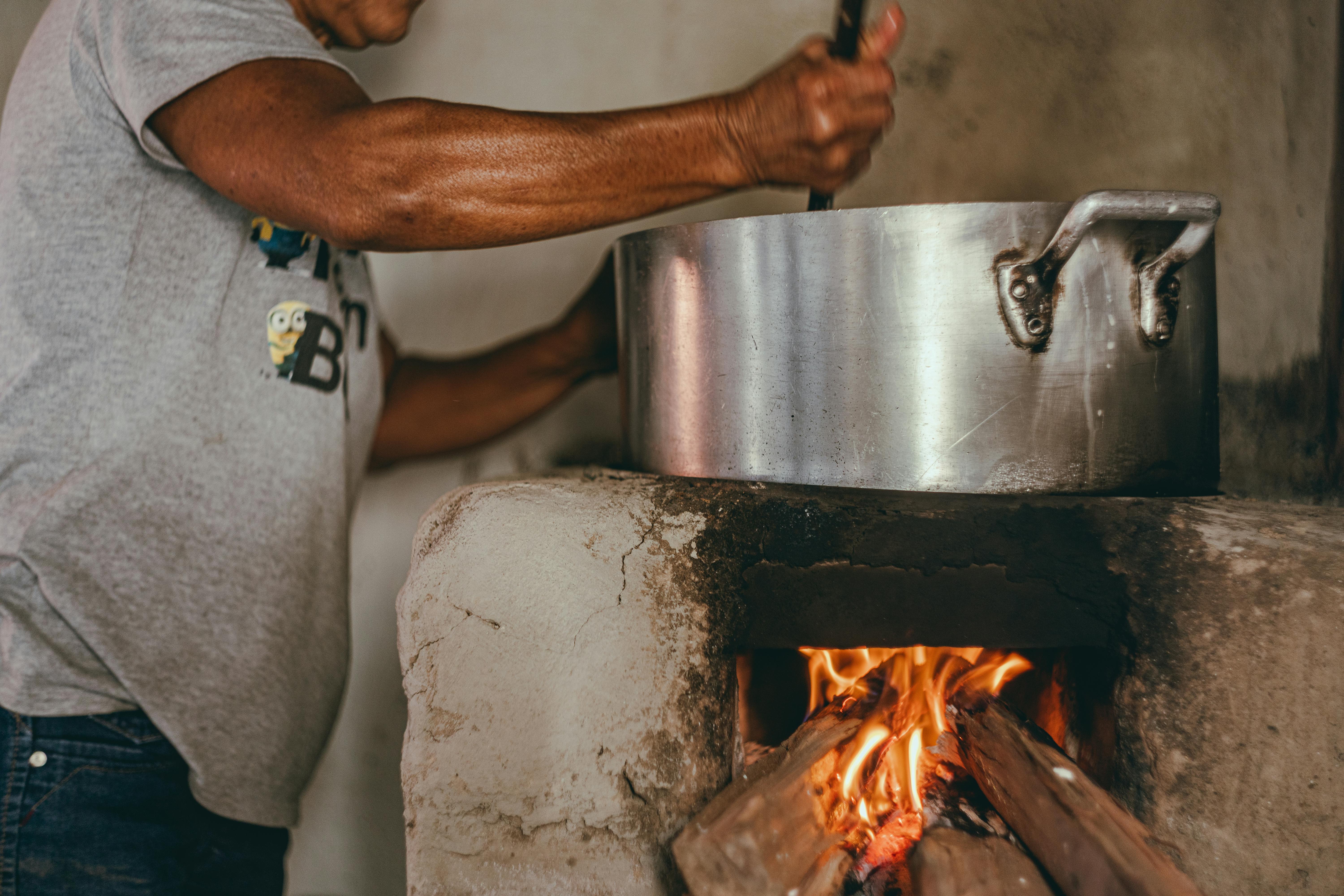
Most grain instructions end with an interval of standing covered off the heat. That step is doing real work, and skipping it produces a texture problem that looks like a cooking error.
A pot cooks unevenly by design
Heat enters from the bottom, so grains near the base reach temperature first and absorb water first. Those at the top of the pile finish later.
Water is also unevenly distributed. Liquid drains toward the bottom under gravity while steam rises, leaving different layers at different moisture levels when the timer sounds.
Opening the lid at that moment reveals wet grains below and drier ones above. The pot is cooked but not equilibrated.
What happens during standing
Off the heat with the lid on, remaining moisture continues migrating from wetter regions to drier ones. The residual heat keeps that migration going without adding more water.
Starch inside individual grains also continues to absorb water it has already taken up, firming the interior. The grain becomes structurally more uniform.
Steam trapped under the lid condenses and is reabsorbed rather than lost. This is why lifting the lid early undermines the process.
Why the texture changes
Grains rested properly separate cleanly rather than clumping, because surface moisture has been drawn inward instead of gluing neighboring grains together.
Fluffing with a fork after resting, rather than before, releases the remaining steam once redistribution is complete. Stirring earlier breaks grains and releases surface starch.
Rice shows this most clearly, but quinoa, farro, millet and bulgur all behave the same way. Any grain cooked by absorption benefits.
Where the rule does not apply
Grains boiled in excess water and drained, in the manner of pasta, do not need resting. Their moisture problem was solved by removing the extra liquid entirely.
Risotto and porridge are the deliberate opposite, where released surface starch is the goal. Constant stirring encourages exactly what resting prevents.
Pressure-cooked grains still benefit, though natural pressure release already provides much of the standing time. Quick release ends the cooking abruptly and often leaves the pot wetter.
Resting and the meal around it
The interval is convenient rather than inconvenient. Ten minutes covered is roughly the time needed to finish a sauce, dress a salad or bring other components to the table.
Grains hold heat well under a lid, so timing the rest to end with the rest of the meal is straightforward. They cool far more slowly than thin vegetables do.
Batch-cooked grains destined for the refrigerator benefit too. Even moisture distribution before chilling produces a container that reheats uniformly rather than in wet and dry patches.
Also by Owen Brannagh
- Eating plant-based where the shops are limitedTransition & Family
- Dinner formulas that work every timeMeal Building
- Cooking with almost no equipmentCooking Technique
- Iron-rich meals: putting the principles togetherMicronutrients