Cooking Technique
Tofu: pressing, freezing and the reasons it fails
Most people who say they dislike tofu have eaten it prepared badly, which is nearly always a moisture problem.
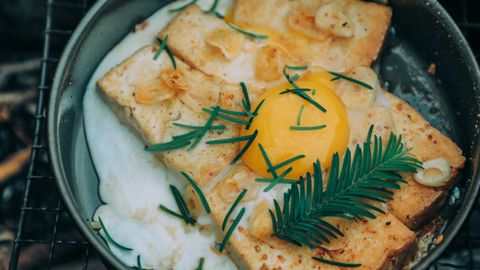
Tofu is soybeans, water and a coagulant. It has almost no flavour of its own, which is the point — it absorbs what you put on it and provides texture and protein.
The reason it fails is almost always water.
The types, and what they are for
Silken. Very high water content, custard-like, does not hold shape. For blending into sauces, desserts, dressings and soups. Do not try to fry it.
Soft and medium. Holds shape gently. For braising, for soups, for gently spooning into things.
Firm. The general-purpose block. Fries, bakes, crumbles, grills.
Extra firm. Denser, less water, best for anything requiring the pieces to survive handling.
Pressed or smoked tofu, sold ready-firmed, which is convenient and generally more expensive.
Using the wrong type is the second most common failure after not pressing.
Pressing
Removing water is what allows tofu to brown, absorb marinade and develop texture.
Wet tofu steams in the pan rather than frying, and steamed tofu is pale, soft and unappealing.
The method: drain the block, wrap it in a clean cloth or several layers of kitchen paper, place something flat on top and weight it. A pan with tins in it works. Thirty minutes is enough; longer is better.
Dedicated presses exist and work well if you eat a lot of tofu.
A faster method: cut the block into slabs first, which increases surface area, and press for fifteen minutes.
Freezing
The technique that transforms texture and that most people have never tried.
Freeze a block of firm tofu solid, then thaw it completely and squeeze the water out.
The ice crystals create a spongy, open structure. The result is chewier, more absorbent, and considerably more interesting than fresh tofu.
It also holds marinade far better, because the sponge structure soaks it up.
Freeze it in the packet, or drained and wrapped. Thaw in the fridge or in warm water, then press hard.
This is the single most effective thing you can do for anyone who says they do not like the texture.
Getting it crisp
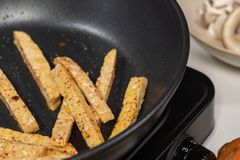
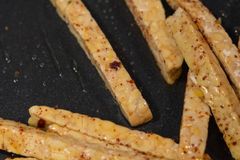
Press first. Cut into pieces — cubes, slabs, torn chunks, which have more surface area and crisp better than neat cubes.
Toss in cornflour or potato starch, a spoonful for a block. This is the professional trick and it works: the starch dries the surface and forms a crisp shell.
Season the starch.
Hot pan, enough oil, and — critically — leave it alone. Tofu sticks until it has formed a crust, at which point it releases. Moving it too early tears it.
Do not crowd the pan.
Oven at high heat also works well and is less attentive: toss in oil and starch, spread on a tray, roast until golden, turning once.
Air fryers do this very effectively if you have one.
Marinating
Tofu absorbs less than people expect, because it is already full of water.
Press it first, and it absorbs considerably more. Freeze and thaw it, and it absorbs more still.
Marinades penetrate slowly. Longer is better, and overnight is not excessive.
A useful approach: cook the tofu first until crisp, then toss it in sauce at the end. The surface takes the flavour and the texture survives.
Salt in the marinade matters, since the tofu itself is bland throughout.
The other soy products
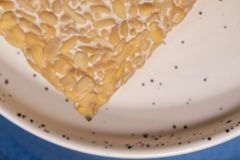
Tempeh is fermented whole soybeans, with a firmer texture and a distinct nutty, slightly bitter flavour. Higher in protein and fibre than tofu.
Steaming or simmering it for ten minutes before cooking reduces the bitterness noticeably, which is worth doing if you have found it strong.
Slice or crumble, brown well, then sauce.
Textured soy protein, dried and rehydrated. Cheap, very high in protein, and it takes on whatever it is cooked with. Rehydrate in stock rather than water.
Yuba, the skin from soy milk, which is excellent and hard to find outside specialist shops.
Edamame, whole immature soybeans, which need nothing but salt.
The soy question
Worth addressing since it comes up constantly.
Soy contains isoflavones, which are phytoestrogens — plant compounds that can bind weakly to oestrogen receptors.
The evidence on human health outcomes has been extensively reviewed. Soy consumption at dietary levels is not associated with adverse hormonal effects in men, and reviews have not found effects on testosterone or feminisation.
For breast cancer, the evidence is reassuring: observational studies generally find soy consumption associated with neutral or favourable outcomes, including in survivors, and major cancer organisations do not advise avoidance.
Thyroid function may be affected in people with existing iodine deficiency, which is an argument for adequate iodine rather than against soy.
Whole soy foods — tofu, tempeh, edamame, soy milk — are the forms with the evidence behind them. Highly processed soy protein isolates in ultra-processed products are a different proposition, as with any ultra-processed food.
Also by Owen Brannagh
- Eating plant-based where the shops are limitedTransition & Family
- Dinner formulas that work every timeMeal Building
- Cooking with almost no equipmentCooking Technique
- Iron-rich meals: putting the principles togetherMicronutrients