Cooking Technique
Salt Timing And How It Moves Water
Salt draws water across cell membranes and alters protein and pectin behaviour, so when it is added changes texture as much as how much is used.
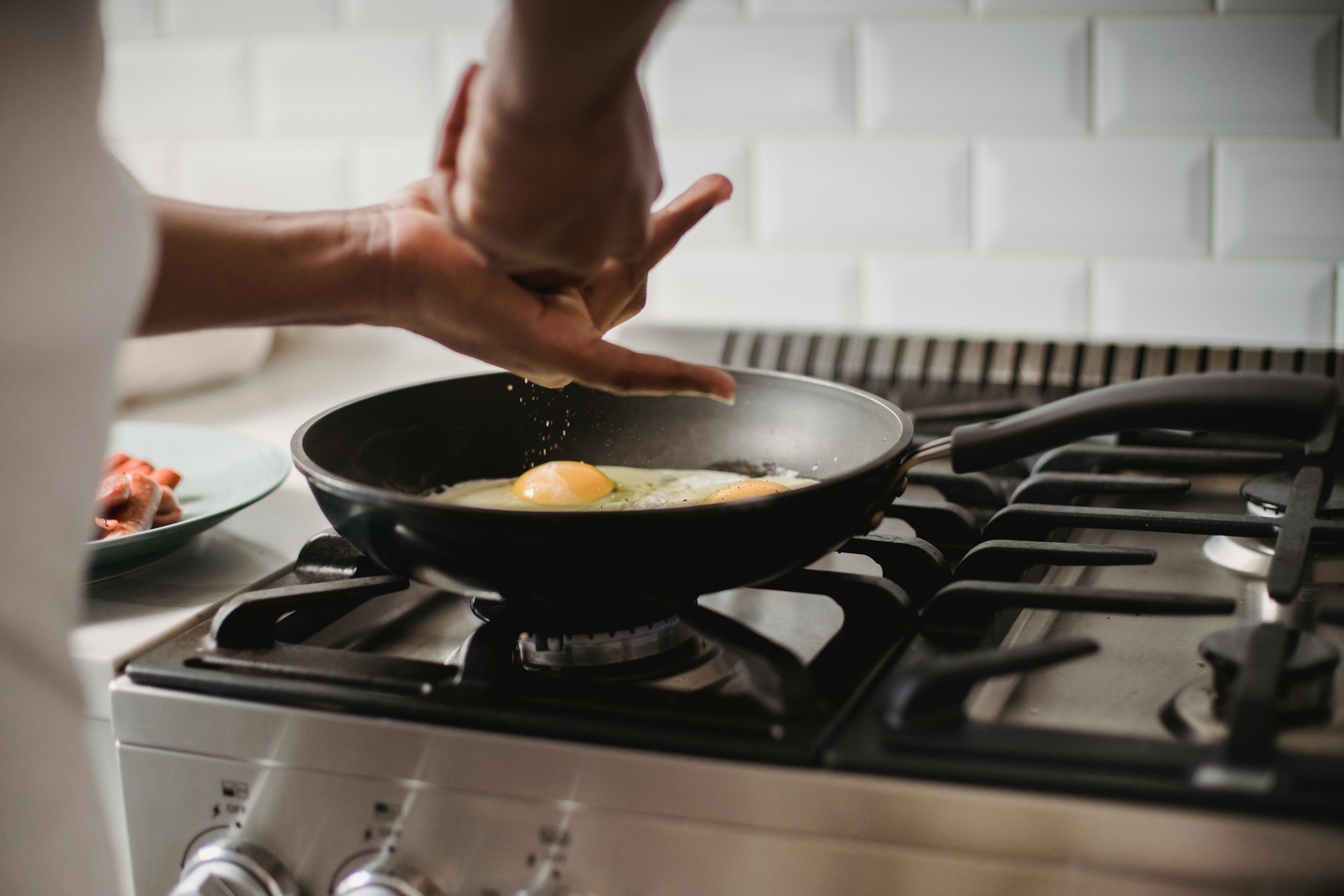
Salt is treated as a seasoning added at the end, but it is chemically active throughout cooking. Its timing changes texture in ways that are entirely predictable.
Osmosis and the surface of a vegetable
Salt on the outside of a vegetable creates a concentration difference across the cell membranes just beneath the surface.
Water moves out along that gradient, which is why salted cucumber, cabbage or aubergine releases visible liquid within minutes.
The cells lose turgor and the tissue becomes limp and flexible. This is desirable for kraut and pickles and undesirable in a salad dressed too early.
Why salted water is different from salted food
Boiling vegetables in salted water reverses the gradient. With salt on both sides, water is not drawn out of the tissue and less of the vegetable's soluble content leaches into the pot.
The same principle applies to blanching greens, where salted water helps preserve both colour and the vegetable's own flavour.
The salt concentration used for boiling is far lower than it feels when tasting, because only a small fraction ends up in the food that is drained.
The legume argument
Salting beans early was long said to toughen their skins. Testing has not supported it, and the effect appears to run the other way.
Sodium ions displace some of the calcium and magnesium holding pectin together, which weakens the cell wall structure and lets beans soften more readily.
Salting the soaking water behaves like a brine, seasoning the interior rather than only the surface, which is why pre-salted beans taste seasoned throughout.
What salt does to perception
Beyond its own taste, salt suppresses bitterness and increases the perceived intensity of sweet and savoury notes.
This is why a bitter green becomes palatable with salt, and why an underseasoned dish can taste flat rather than merely unsalted.
Salt also draws out aromatic compounds by breaking down cell structure, so salting onions or mushrooms early releases both moisture and flavour into the pan.
Building it in stages
Seasoning in layers, adding a small amount at each stage, gives salt time to diffuse into the interior of the ingredients rather than sitting on the surface.
Diffusion is slow and depends on the density of the food, which is why a thick stew needs its salt earlier than a quick stir-fry does.
The result is a dish that tastes seasoned rather than salty, using no more total salt than a single addition at the end would have required.
Also by Owen Brannagh
- Eating plant-based where the shops are limitedTransition & Family
- Dinner formulas that work every timeMeal Building
- Cooking with almost no equipmentCooking Technique
- Iron-rich meals: putting the principles togetherMicronutrients