Cooking Technique
Cast Iron, Nonstick And What Food Sticks To
Sticking is a chemical bond between food proteins and bare metal, which explains why seasoning, oil and pan temperature matter more than the price of the skillet.
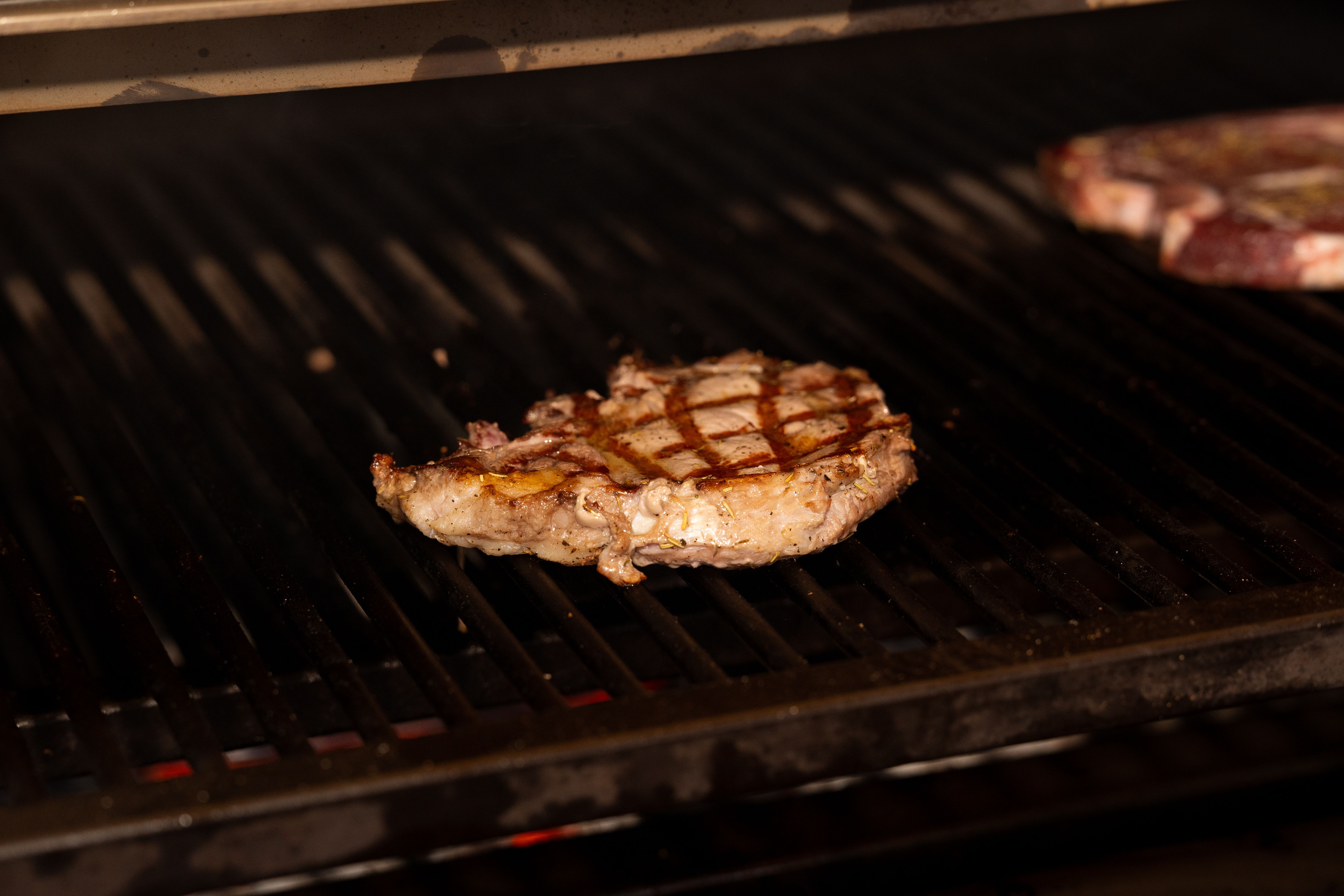
Food sticking to a pan is not a failure of effort. It is a bond forming between the food and the metal surface, and different cookware prevents that bond in different ways.
What sticking actually is
Bare metal surfaces are chemically reactive and microscopically rough. Proteins and starches in food form bonds with the metal and settle into its pits as they heat and set.
Once bonded, pulling the food away tears it, leaving a layer behind. The stuck fragment then heats further and darkens, which is where the impression of burning comes from.
Anything that keeps food from touching bare metal prevents this. That barrier is provided either by a coating, by polymerized oil, or by a layer of steam and fat.
How seasoning works on cast iron
Seasoning is not oil sitting on the surface. Thin layers of oil heated past their smoke point polymerize into a hard, largely inert film bonded to the iron.
That film fills the microscopic roughness and is far less chemically reactive than the metal beneath. Building it takes repeated thin applications rather than one heavy coat.
Acidic foods, long simmering and harsh scrubbing degrade the film. This is why tomato-heavy sauces and vinegar-forward dishes are usually kept out of a newly seasoned skillet.
What nonstick coatings do differently
Manufactured nonstick surfaces are low-energy materials that food has little chemical affinity for. They work immediately and require no maintenance layer.
The tradeoff is durability and heat tolerance. These coatings degrade at high temperatures and under metal utensils, and a scratched pan progressively loses the property that defined it.
Ceramic-style coatings are a distinct chemistry with similar behavior and generally shorter working lives. All of them favor lower-heat cooking rather than aggressive searing.
Temperature does more than material
A pan brought to temperature before food is added forms a vapor layer at the contact surface as moisture flashes to steam. That layer briefly holds the food off the metal.
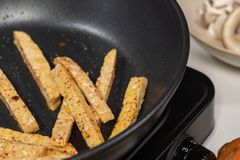
Food added to a cool pan sits in contact while both heat slowly, which is the ideal condition for bonding. Tofu and mushrooms suffer from this most visibly.
Crowding the pan produces the same result by dropping the surface temperature and trapping released moisture. Cooking in batches is a temperature decision, not a fussiness.
Choosing by task
Stainless steel excels where browned residue is wanted for a pan sauce, and sticking there is partly the point. Deglazing lifts that residue back into the dish.
Cast iron and carbon steel suit high-heat searing and oven transfers, holding temperature when cold food arrives. Nonstick suits eggs' plant-based analogues, delicate pancakes and low-oil cooking.
Most kitchens end up with more than one for that reason. The pan is a tool matched to a surface behavior rather than a general-purpose upgrade.
Also by Owen Brannagh
- Eating plant-based where the shops are limitedTransition & Family
- Dinner formulas that work every timeMeal Building
- Cooking with almost no equipmentCooking Technique
- Iron-rich meals: putting the principles togetherMicronutrients