Micronutrients
Vitamin C Disappears Between Harvest And Plate
Ascorbic acid degrades with heat, oxygen, light and time, so storage and cooking decisions affect how much of a fruit or vegetable's vitamin C survives.
Vitamin C content is usually quoted for a food as though it were fixed. It is instead a starting value that declines from the moment of harvest.
Why the molecule is fragile
Ascorbic acid is an antioxidant, which means it readily gives up electrons. That same reactivity leaves it vulnerable to oxidation by air.
Heat accelerates the reaction, light contributes, and enzymes released when plant tissue is damaged speed it further. Cutting a vegetable begins the process locally.
Because the vitamin is highly water-soluble, it also leaves food dissolved in any water it touches. Two independent loss routes therefore run at once.
Storage time is the quiet cost
Fresh produce continues losing vitamin C in refrigeration, slowly, and faster at room temperature. Weeks of storage matter more than most cooking steps.
This is why frozen produce, frozen soon after harvest, often measures competitively against fresh produce that traveled long distances and sat in a display case.
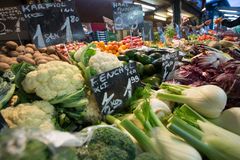
Whole intact produce holds the vitamin better than cut. Precut vegetables have far more exposed surface and begin oxidizing at every cut face.
Cooking choices change retention
Boiling combines heat with a large volume of water, which is the worst case. Much of the vitamin ends up in liquid that is often discarded.
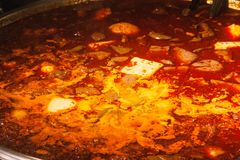
Steaming, microwaving and quick stir-frying limit water contact and shorten time at temperature, retaining more. Soups keep what dissolves, since the liquid stays in the dish.
Acidic conditions stabilize ascorbic acid somewhat, which is one reason tomato-based dishes and citrus-dressed preparations preserve it better than neutral ones.
Why the loss matters less than it sounds
The American food supply provides vitamin C from many directions, including citrus, peppers, broccoli, strawberries, potatoes and fortified juices. Most diets contain considerable redundancy.
Requirements are also modest relative to what a single serving of a strong source provides. Losing a portion of a large amount still leaves an adequate contribution.
Raw sources in the diet, such as fruit and salads, sidestep cooking losses entirely and quietly carry much of the intake in practice.
The interaction worth knowing
Vitamin C substantially improves the absorption of non-heme iron, the form found in plant foods, by keeping it in a soluble state through the digestive tract.
That effect depends on the vitamin being present in the same meal as the iron, which means retention through cooking has consequences beyond the vitamin itself.
Pairing beans or greens with peppers, tomatoes or citrus is the practical expression of this. The mechanism rewards meal composition rather than daily totals.
Also by Dr. Farah Siddiqui
- Sustaining it for decadesTransition & Family
- Reintroducing foods, if you decide toTransition & Family
- Young athletes on plant-based dietsSport & Performance
- Protein requirements across a lifetimeProtein & Amino Acids