Micronutrients
Iron: absorption is the whole game
Plant foods contain plenty of iron. Whether you absorb it depends almost entirely on what you eat and drink alongside it.
Iron in plant foods is non-haem iron, which is absorbed considerably less efficiently than the haem iron in meat.
Absorption rates for non-haem iron are strongly influenced by what accompanies it, which means the practical question is not how much iron a food contains but how much of it you get.
The requirement
Recommended intakes vary by age and sex, and are substantially higher for menstruating women than for men.
Several bodies suggest that people eating no haem iron may need a higher intake than the general recommendation to account for lower absorption — figures around 1.8 times the standard recommendation are commonly cited, though this is debated and there is evidence that absorption adapts over time in habitual consumers.
The practical implication is to eat iron-rich foods regularly and to pay attention to what enhances and inhibits absorption, rather than to chase a number.
What enhances absorption
Vitamin C, by far the most powerful factor. Consuming vitamin C with a meal can increase non-haem iron absorption several-fold.
This is the single most actionable thing on this page. Lemon juice on lentils. Tomatoes with beans. Peppers in a stir-fry. A piece of fruit after a meal.
It does not require a supplement; ordinary quantities of vitamin C-containing food do it.
Other organic acids in fruit and vegetables have similar though weaker effects.
Fermentation, soaking, sprouting and leavening, all of which reduce phytate content and improve absorption.
This is why sourdough bread delivers more available iron than unleavened, and why soaked and cooked legumes are better than raw preparations.
Cooking in cast iron, which genuinely adds iron to food, particularly acidic dishes. A modest and real effect.
What inhibits absorption
Tea and coffee. Polyphenols bind iron and reduce absorption substantially — studies have found reductions of a large proportion when tea is consumed with a meal.
This is the most consequential inhibitor and the easiest to address. Move tea and coffee an hour away from iron-containing meals.
For anyone with low iron who drinks tea with every meal, this single change frequently makes a measurable difference.
Phytates, in whole grains, legumes, nuts and seeds. Reduced by soaking, sprouting, fermenting and leavening.
Note the tension: these are also the iron-containing foods. The answer is preparation rather than avoidance.
Calcium, which inhibits both haem and non-haem iron absorption. Relevant if taking a calcium supplement, which should be separated from iron-rich meals.
Some polyphenols in other foods, including certain herbs and cocoa.
The plant sources
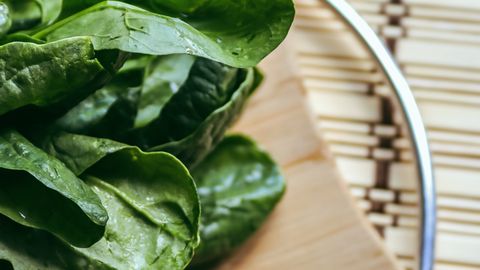
Legumes, particularly lentils, chickpeas and white beans. Tofu and tempeh. Dark leafy greens, though the iron in spinach is poorly absorbed because of oxalate content. Pumpkin seeds, sesame seeds and tahini. Fortified breakfast cereals. Dried fruit, particularly apricots. Wholegrains. Blackstrap molasses.
Fortified foods deserve a mention: many breakfast cereals are fortified at levels that make a meaningful contribution, and combined with vitamin C from fruit, they are an effective vehicle.
The practical meal construction
An example that illustrates the principle.
Lentil soup with tomatoes and lemon, with bread, followed by an orange. Good iron content, substantial vitamin C, no tea.
Versus: the same lentil soup with a mug of tea and no fruit. Considerably less absorbed iron from an identical dish.
Deficiency
Iron deficiency is the most common nutritional deficiency worldwide and it affects meat-eaters as well.
Symptoms: fatigue, weakness, breathlessness on exertion, pallor, poor concentration, cold hands and feet, brittle nails, hair loss, and in some people restless legs or unusual cravings for non-food items.
These are non-specific, which is why testing matters.
Get tested rather than guessing. A full blood count and ferritin are the standard starting point. Ferritin reflects stores and can be elevated by inflammation, which complicates interpretation.
Deficiency can exist without anaemia — depleted stores with a normal haemoglobin — and this frequently causes symptoms.
Do not supplement without testing
An important point.
Iron overload is harmful, and some people have haemochromatosis, a genetic condition causing excessive absorption, in which supplementation is dangerous.
Excess iron also causes gastrointestinal side effects and may affect absorption of other minerals.
Iron supplements should be taken on the basis of a test result and, ideally, with medical guidance about dose and duration.
Where supplements are needed: taking them on alternate days rather than daily has evidence for better absorption, since a large dose raises hepcidin and blocks absorption for the following day. Take with vitamin C, away from tea, coffee and calcium.
Who should pay most attention
Menstruating women, particularly with heavy periods, which is a common and under-investigated cause of deficiency.
Pregnant women.
Endurance athletes.
Adolescents during growth.
Anyone with a gastrointestinal condition affecting absorption.
Blood donors.
Do not take iron supplements without testing. Persistent fatigue, breathlessness or heavy menstrual bleeding warrants medical assessment — iron deficiency in adults sometimes has an underlying cause that needs investigating.
Also by Dr. Farah Siddiqui
- Sustaining it for decadesTransition & Family
- Reintroducing foods, if you decide toTransition & Family
- Young athletes on plant-based dietsSport & Performance
- Protein requirements across a lifetimeProtein & Amino Acids