Sport & Performance
Nitrate-Rich Vegetables And Blood Flow
Dietary nitrate is converted through bacteria in the mouth into a signalling molecule that dilates blood vessels, which is why beetroot appears in sport nutrition.

Beetroot became a sport nutrition staple through a specific and well-described pathway, one that begins with bacteria on the tongue. The mechanism is worth understanding on its own terms.
The conversion pathway
Nitrate is abundant in leafy greens and beetroot, absorbed from the gut, and a share of it is secreted back into saliva rather than excreted.
Bacteria on the surface of the tongue reduce that nitrate to nitrite. Humans lack the enzyme to do this themselves and depend entirely on the resident bacteria.
Swallowed nitrite is converted further to nitric oxide, particularly in conditions of low oxygen and low pH, which are exactly the conditions found in hard-working muscle.
What nitric oxide does
Nitric oxide is a signalling molecule that relaxes the smooth muscle in blood vessel walls, widening the vessel and increasing blood flow.
It also appears to influence mitochondrial efficiency, reducing the oxygen cost of producing a given amount of work.
The combination is why the effect shows up most clearly in endurance activity, and more in less-trained individuals than in highly trained ones.
Why mouthwash interferes
Antibacterial mouthwash kills the tongue bacteria responsible for the first conversion step, and the pathway stops at that point.
This is one of the more striking demonstrations of a bacterial population doing something the human body cannot do for itself.
It also illustrates how indirect the chain is. A vegetable's effect here depends on a microbial population that ordinary hygiene practices can disrupt.
Which foods carry it
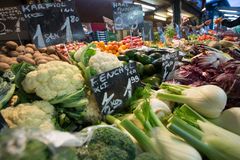
Nitrate content is highest in leafy greens such as rocket, spinach and lettuce, and in beetroot, celery and radish.
Content varies considerably with growing conditions, soil and fertiliser use, so the same vegetable differs between sources far more than most nutrients do.
Concentrated beetroot products exist precisely because natural variation makes the whole vegetable an unreliable delivery route for a specific quantity.
Storage and cooking also matter, since nitrate is water-soluble and leaches into cooking water in the same way minerals do. Raw or lightly cooked greens retain more of it.
Where the caution lies
Dietary nitrate from vegetables is not the same exposure as nitrate and nitrite added to processed foods, where the surrounding chemistry differs.
Vegetables carry vitamin C and polyphenols that inhibit the formation of the compounds that made processed nitrite a concern.
Anyone taking medication affecting blood pressure or blood vessels should raise concentrated nitrate products with a clinician, since the pathways interact directly.
For everyone else, the sensible reading is that eating leafy greens and beetroot regularly supports a pathway that operates continuously, rather than being a trick applied before a race.
Also by Dr. Farah Siddiqui
- Sustaining it for decadesTransition & Family
- Reintroducing foods, if you decide toTransition & Family
- Young athletes on plant-based dietsSport & Performance
- Protein requirements across a lifetimeProtein & Amino Acids