Micronutrients
Enrichment And Fortification Are Not The Same Thing
Enrichment restores nutrients milling removed, while fortification adds nutrients a food never had, and the distinction explains much of the American grain and plant-milk aisle.

Two words appear constantly on American food packaging and are used interchangeably in conversation. In regulation and in practice they describe different interventions.
Enrichment replaces what processing removed
Refining wheat strips away the bran and germ, and with them a substantial share of several B vitamins and iron. Enrichment adds specified amounts of those nutrients back.
The standard set of additions for enriched flour in the United States covers thiamin, riboflavin, niacin, folic acid and iron. These are the nutrients the milling process removed most sharply.
Enrichment does not restore everything. Fiber, magnesium, vitamin E and various trace minerals are not part of the standard and remain lower than in the whole grain.
Fortification adds something new
Fortification introduces a nutrient that the food did not meaningfully contain in the first place. It is a public health measure attached to a convenient carrier food.
Iodized salt is the classic American example, adding iodine to a product with no natural iodine at all. Vitamin D added to milk follows the same logic.
The carrier is chosen for reach rather than for suitability. A widely eaten staple delivers the nutrient to the largest number of households.
Why plant milks matter here
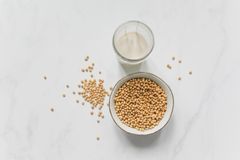
Plant beverages are fortified rather than enriched, since almond, oat and soy bases contain little calcium, vitamin D or B12 naturally.
Fortification of these products is voluntary in the United States, and the amounts vary between brands and even between varieties from one brand. The label is the only reliable guide.
Settling is a practical complication. Added minerals can separate to the bottom of a carton, so shaking before pouring affects how much actually reaches the glass.
Folic acid is a public health case study
Folic acid was added to the enrichment standard for cereal grain products in the United States specifically to reduce neural tube defects, following evidence linking folate status to that outcome.
The intervention required a food eaten broadly and regularly, which is why grain products were chosen rather than a supplement program. Coverage was the design goal.
An unintended consequence is that people avoiding refined grains receive less of that fortification. Whole grain flours are not required to be enriched, since nothing was removed.
Reading the difference on a package
Ingredient lists show enrichment as a parenthetical after the flour, naming the added vitamins. Fortification usually appears as separate ingredients near the end of the list.
Neither term implies anything about the overall quality of the food. A heavily processed product can be enriched and a nutritious one can be neither.
For anyone building a diet largely from whole plant foods, the practical point is that fortified products are doing specific work. Substituting an unfortified alternative quietly removes that contribution.
Also by Dr. Farah Siddiqui
- Sustaining it for decadesTransition & Family
- Reintroducing foods, if you decide toTransition & Family
- Young athletes on plant-based dietsSport & Performance
- Protein requirements across a lifetimeProtein & Amino Acids