Protein & Amino Acids
The complete protein question, settled
The idea that plant proteins are incomplete and must be combined has a specific history, a specific error, and a specific retraction.
The complete protein idea persists decades after it was corrected, and it is worth understanding both what it got wrong and what it got right.
The actual science
There are nine essential amino acids that humans cannot synthesise and must obtain from food.
Every plant food contains all nine. This is the point most often misunderstood. There is no plant protein that is missing an essential amino acid entirely.
What varies is the proportion. Relative to human requirements, legumes are lower in methionine, and grains are lower in lysine.
The term limiting amino acid describes the one present in the lowest amount relative to need — it determines how much of the protein can be used for synthesis.
Soy is a useful exception: its amino acid profile is close to requirements across the board, which is why it scores comparably to animal proteins on digestibility-corrected measures.
Where the myth came from
The idea was popularised by a widely read book published in 1971, which advised careful combining of plant proteins at each meal.
The author subsequently retracted the advice, explicitly, in later editions, stating that it had been unnecessary and had made plant-based eating seem more complicated than it is.
The correction has not travelled nearly as far as the original claim.
Why combining at each meal is unnecessary
The body maintains a pool of free amino acids, replenished from dietary protein and from the continuous turnover of the body's own proteins.
Amino acids from a meal eaten at lunch are available to combine with those from a meal eaten at dinner. The pool does not empty between meals.
Which means that variety across the day is sufficient. Beans do not need rice at the same sitting.
The position of major dietetic associations is that varied plant protein intake across the day provides all essential amino acids.
What the myth got right
Two things worth preserving.
Variety matters. A diet built on a single plant protein source would be less good than one drawing on several. Legumes, grains, nuts, seeds and soy have different profiles and eating a range covers everything comfortably.
Total protein needs a modest upward adjustment, because of lower digestibility and the limiting amino acid issue, which reduces the usable proportion.
The commonly suggested adjustment is in the region of ten to twenty percent above the general recommendation.
Lysine, specifically
The amino acid most worth attention on a plant-based diet, because grains are the staple in most diets and grains are relatively low in it.
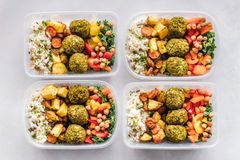
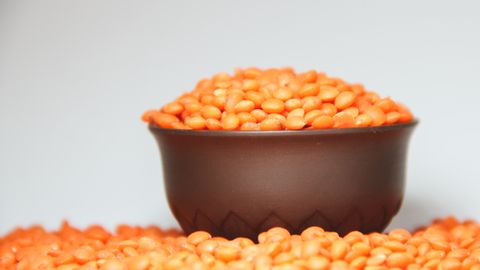
The practical answer is straightforward: eat legumes regularly. Legumes are lysine-rich, and a diet including beans, lentils, chickpeas or soy foods daily covers it without any calculation.
Where lysine intake becomes marginal is in diets that are largely grain-based with few legumes — which is a pattern seen in some very restricted diets and in some traditional diets under conditions of poverty.
For anyone eating a portion of legumes or soy each day, it is not a concern.
The digestibility scores
Various scoring systems exist for protein quality, combining amino acid profile with digestibility.
Animal proteins and soy generally score highest. Other plant proteins score lower.
Two things about these scores are worth knowing.
They evaluate proteins in isolation, whereas people eat mixed meals in which the limitations of one source are offset by another.
And processing changes them. Cooking, soaking, sprouting and fermenting all improve digestibility considerably from the raw values that are sometimes cited.
The practical version
Eat enough total protein. Include legumes or soy daily. Eat a variety of sources across the week. Do not think about combining.
That is the whole of it, and it is what people eating traditional plant-based diets around the world have always done without any nutritional science — beans and rice, dal and roti, hummus and pitta, tofu and noodles.
Those pairings exist because they taste good and because both crops grew in the same place, and the nutritional complementarity was a consequence rather than a design.
Who does need to pay more attention
Anyone on a very restricted diet with few protein sources.
Older adults, where higher intakes and higher per-meal doses are recommended.
Athletes with high requirements, where hitting the total requires deliberate planning.
Children, where growth requirements are proportionally higher and where restricted diets need professional input.
Anyone with a condition affecting digestion or absorption.
For everyone else, this is a solved problem that the internet keeps re-opening.
General information rather than individual advice. Anyone with concerns about nutritional adequacy, particularly for children, should consult a registered dietitian.
Also by Dr. Farah Siddiqui
- Sustaining it for decadesTransition & Family
- Reintroducing foods, if you decide toTransition & Family
- Young athletes on plant-based dietsSport & Performance
- Protein requirements across a lifetimeProtein & Amino Acids