Micronutrients
Omega-3 on a plant-based diet: the conversion problem
Flaxseed provides the plant omega-3, and the body converts very little of it into the forms that matter most. There is a straightforward solution.
Omega-3 fatty acids come in several forms, and the distinction between them is the whole issue.
The three that matter
ALA — alpha-linolenic acid — is the plant form, found in flaxseed, chia, hemp, walnuts and rapeseed oil. It is an essential fatty acid, meaning the body cannot make it.
EPA and DHA are the long-chain forms found in oily fish and in algae. These are the forms associated with most of the health effects attributed to omega-3, particularly for the brain, the eyes and cardiovascular function.
Fish do not make them; they accumulate them from algae.
The conversion issue
The body can convert ALA into EPA and DHA. It does so inefficiently.
Studies of conversion rates find that only a small percentage of ALA is converted to EPA, and conversion to DHA is lower still, frequently reported at a few percent or less.
Conversion is influenced by several factors. High intake of omega-6 fatty acids competes for the same enzymes and reduces conversion, and typical modern diets are high in omega-6 from vegetable oils.
Women convert somewhat more efficiently than men, thought to relate to oestrogen and to the requirements of pregnancy.
The practical consequence: eating flaxseed does not reliably produce adequate DHA status. Studies consistently find lower blood levels of EPA and DHA in vegetarians and vegans than in fish eaters.
Does it matter?
Honestly, this is less settled than the supplement industry suggests.
Lower blood levels are consistently observed. Whether that translates into worse health outcomes is less clear — large trials of omega-3 supplementation in the general population have produced mixed results, and several major trials have found smaller effects than earlier observational work suggested.
Where the case is stronger:
Pregnancy and infancy, where DHA is required for fetal and infant brain and eye development. This is the situation where supplementation is most clearly warranted.
Older adults, where there is interest in cognitive outcomes, though the evidence is not conclusive.
People with very low intake and no conversion substrate at all.
What to do
Eat ALA sources daily. A tablespoon of ground flaxseed, or chia, or a handful of walnuts.
Flaxseed must be ground — whole seeds pass through undigested. Grind it fresh or buy ground and keep it in the fridge, since the oil oxidises.
Reduce omega-6 intake to improve conversion. Practically: use olive oil and rapeseed oil rather than sunflower, corn or soybean oil as your default, and reduce ultra-processed foods, which are the main dietary source of omega-6.
This is a reasonable adjustment regardless.
Consider an algal supplement. This is the direct solution.
Algal oil provides EPA and DHA from the original source, without the fish. Supplementation reliably raises blood levels.
Doses in the range of two hundred to five hundred milligrams of combined EPA and DHA daily are commonly recommended for general use, with higher doses sometimes suggested in pregnancy.
It is more expensive than fish oil and it is the only plant option that works directly.
The ratio question
The omega-6 to omega-3 ratio is frequently discussed and is somewhat oversimplified.
What is reasonably supported: very high omega-6 intake reduces ALA conversion, and modern diets are high in omega-6 relative to historical patterns.
What is less supported: that omega-6 is inherently harmful. Linoleic acid, the main dietary omega-6, is essential, and evidence associates higher intake with favourable cardiovascular outcomes when it replaces saturated fat.
The sensible position: increase omega-3, moderate omega-6 from ultra-processed sources, and do not treat seed oils as poison, which the evidence does not support.
The sources, practically
Ground flaxseed, the densest ALA source. A tablespoon covers requirements comfortably.
Chia seeds, similar, and they do not need grinding.
Hemp seeds, with a favourable ratio and a pleasant flavour.
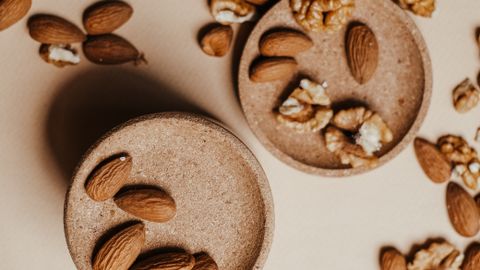
Walnuts, the best nut source.
Rapeseed oil, a useful cooking oil with meaningful ALA content.
Soybeans and tofu, contributing modest amounts.
The practical summary
Ground flaxseed or chia daily. Use olive and rapeseed oil rather than high omega-6 oils. Consider an algal supplement, particularly if pregnant, breastfeeding, or over sixty.
That covers it, and the algal supplement is the part most people skip and the part with the clearest rationale.
General information rather than individual advice. Pregnant and breastfeeding women should discuss omega-3 supplementation with their midwife or doctor. Anyone on anticoagulant medication should mention omega-3 supplements to their prescriber.
Also by Dr. Farah Siddiqui
- Sustaining it for decadesTransition & Family
- Reintroducing foods, if you decide toTransition & Family
- Young athletes on plant-based dietsSport & Performance
- Protein requirements across a lifetimeProtein & Amino Acids