Protein & Amino Acids
Nuts and seeds: the ones worth the money
Nuts and seeds contribute protein, fat, minerals and texture, and the price range across them is enormous for a fairly small nutritional difference.

Nuts and seeds are a small category doing a lot of work in a plant-based diet: protein, unsaturated fat, minerals, vitamin E and texture.
They are also among the more expensive items in a basket, and the price differences do not correspond to nutritional differences.
What they contribute
Roughly fifteen to twenty-five grams of protein per hundred grams, and high in fat, which makes them energy dense — around six hundred calories per hundred grams for most.
Which means portions are small and the contribution to protein is modest per serving.
Where they matter more: minerals. Zinc, magnesium, selenium, copper, iron and calcium in varying amounts, and the fat helps with absorption of fat-soluble vitamins from the rest of the meal.
The specific ones worth knowing
Pumpkin seeds. The best value in the category. High in protein, exceptionally high in zinc, high in magnesium and iron. Cheap relative to nuts.
If you buy one thing from this article, buy these.
Sunflower seeds. Cheapest of all, good vitamin E and selenium content, decent protein.
Peanuts. Botanically a legume, higher in protein than most nuts, and by a wide margin the cheapest.
Peanut butter is one of the most cost-effective ways to add protein, fat and energy to anything.
Hemp seeds. Notably high in protein with a complete amino acid profile, and containing omega-3. More expensive and genuinely nutritionally distinctive.
Flaxseed. The densest plant source of ALA omega-3. Must be ground to be absorbed. Cheap.
Chia. Similar omega-3 content, absorbed without grinding, high in fibre. More expensive than flax for a similar benefit.
Sesame and tahini. Good calcium and iron content, and tahini is one of the most useful ingredients in a plant-based kitchen.
Walnuts. The best nut source of ALA omega-3.
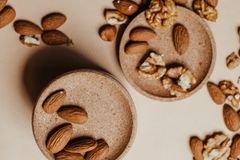
Almonds. Good vitamin E and calcium. Frequently expensive relative to the nutritional distinction.
Brazil nuts. Extremely high in selenium — one or two a day covers requirements. Do not eat handfuls, since selenium toxicity is real.
Cashews. Useful for creamy sauces because they blend smooth. Expensive, and it is worth knowing that cashew processing has documented labour concerns.
Pine nuts and macadamias. Expensive and nutritionally unremarkable relative to the price. Buy for flavour rather than nutrition.
The health evidence
One of the better-supported associations in nutrition.
Regular nut consumption is associated in large cohort studies and in some trials with reduced cardiovascular risk and reduced all-cause mortality.
The association appears across nut types and does not require a specific one.
Notably, nut consumption is not associated with weight gain in the observational literature despite the energy density, with proposed explanations including satiety effects and incomplete absorption of the fat from the intact food matrix.
Roasted, raw, salted
Nutritionally similar. Roasting reduces some heat-sensitive nutrients modestly and improves flavour and digestibility.
Salted nuts add sodium and are otherwise the same. This is not the main sodium problem in most diets.
Toasting them yourself, in a dry pan, is cheaper and better than buying roasted.
Storage
The point most people ignore.
Nuts and seeds are high in unsaturated fat, which oxidises. Rancid nuts taste bitter and stale, and oxidised fats are not desirable.
Store in a cool dark place, or in the fridge or freezer for anything you will not use quickly.
Ground flaxseed in particular oxidises rapidly and should be kept refrigerated.
Buy in quantities you will actually use.
Getting the most from them
Toast them. Dry pan, a few minutes, watching. Transforms the flavour.
Use them as texture. A handful of toasted seeds on any dish adds crunch, which is what plant-based food most often lacks.
Blend them into sauces. Cashews for creamy sauces, tahini for dressings, peanut butter for satay.
Nut butters are frequently better value than whole nuts and easier to incorporate.
Check the ingredients — the good ones contain nuts and possibly salt, and the cheap ones contain palm oil and sugar.
Allergy
Tree nuts and peanuts are among the most significant food allergens, and reactions can be severe.
Whole nuts are also a choking hazard for children under five — use butters and ground nuts.
Current guidance on introducing allergenic foods to infants has changed substantially, generally toward earlier introduction rather than avoidance, and should be followed as advised locally.
The budget position
If cost is a constraint: peanuts, sunflower seeds, pumpkin seeds and flaxseed cover most of the nutritional ground at a fraction of the cost of almonds, cashews and walnuts.
Buy them from ethnic grocers or in bulk, where the price difference from supermarket packets is substantial.
General information rather than individual advice. Whole nuts are a choking hazard for young children. Anyone with a nut allergy should follow medical advice.
Also by Dr. Farah Siddiqui
- Sustaining it for decadesTransition & Family
- Reintroducing foods, if you decide toTransition & Family
- Young athletes on plant-based dietsSport & Performance
- Protein requirements across a lifetimeProtein & Amino Acids